UK
The Shop Stewards’ Movement and Workers’ Control 1910-1922 by Branko Pribićević
This is the first chapter taken from the book with the above title. It is a brief look at how the concept of 'workers control' developed in the period of the 'syndalicalist revolt' and the subsequent development of the shop stewards movement. Despite Branko Pribićević being a political scientist in Tito's former Yugoslavia and member of the Central Committee of the League of Communists of Serbia. It is a fairly balanced and reasonable description looking at the three main currents;Industrial Unionism, Syndicalism and Guild Socialism.
The Movement for Workers’ Control
Black Flag 229
Issue 229 saw a widening out of content for the magazine, with both internal looks at issues of interest to the anarchist movement and analysis of events in the wider world, including the headline article on the aftermath of the Grek riots at the end of 2008 and over the economic crisis gripping the world.
In focus: In the first of a three-part series, Tom Gaynor looks at New Labour’s time in power.
News: Laura Norder enters the Sparrow’s Nest, Nottingham’s archive of liberty.
Interview: Black Flag talks to Irish anarchist Andrew Flood about his recent journey into the weird and wonderful world of US activism.
Black Flag 230 - Sneak Preview
Following a fantastic response at the London bookfair to this issue, Black Flag is even more proud than usual (so that's pretty damn proud) to do our usual giveaway of one particularly thoughtful article from the latest magazine, issue 230 to show roughly what we're about and encourage people to buy, distro and volunteer to help out the real deal in paper, thus keeping us running.
This issue, Brighton SolFed writes in Black Flag about the class logic behind the destruction of the post war social contract...
ALSO IN THIS ISSUE
- Cover story: Examining the new welfare bill and why its regressive politics must be fought
- Theory: Exploring the roots of anarchist economics
King Mob poster and image gallery
Posters, stickers and images produced by Situationist-influenced group King Mob.
Taken from www.revoltagainstplenty.com
Privatising the post: too much, too late
Rebecca Gordon-Nesbitt details the turbulent history of government attempts to sell off the postal service and how consultants conspired to present public sector looting as sheer imperative.
While the government may have shelved plans to privatise the Royal Mail, the self-affirming logic of neoliberalism that informed the plans persists. Published in mid-July 2009, this article provides useful background to the 2009 postal strikes.
State Capitalism in Britain
Despite the State being the main investor in the UK's national economy, the official rhetoric of private sector productivity is alive and well. James Heartfield takes a look at New Labour's failed strategy of privatising public services and the rise of ‘corporate welfare'
Two very contradictory stories about British capitalism are told today. The first is that the State is eating up more and more of the private sector. The sudden increase of public shares in the major banks and the falling of the railways into receivership is evidence of a return to the nationalisations of the 1970s.
Bus strikes in East London
Bus drivers and engineers in East London walked out today in a 24-hour action which stopped around 750 buses and either froze or disrupted 58 routes.
The East London Bus Company employs 2,600 workers, of which all but 200 are members of the Unite Union. The union balloted its members after the company imposed a pay freeze on its staff, claiming the recession had forced their hand. The vote was in favour of strike action by 84%.
Filling The Vacuum - London AFA
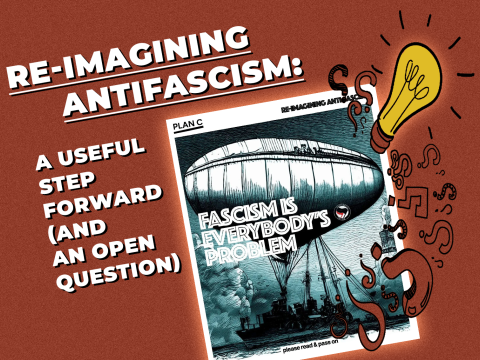
1995 document by some people within Anti-Fascist Action following the BNP's decision to abandon the streets. The document led to the creation of the Independent Working Class Association.
In November 1990, at a public meeting in east London, AFA declared that the "working class is the natural constituency of socialism, not fascism. Racism and socialism are incompatible. One only exists at the expense of the other. The success of the Far-Right is due to the fact that the Left are not seen as a credible option.
Higher education: It's become our crisis
Already faced with cuts before the crisis, education now looks to be one of the sectors hardest hit, and not merely financially. Kirsten Forkert looks at the current conflict in higher education and the difficulties faced by those trying to protect it
We need to consider UK higher education in the context of a situation where neoliberalism, in some ways, has been destabilised economically but remains hegemonic on an ideological level.