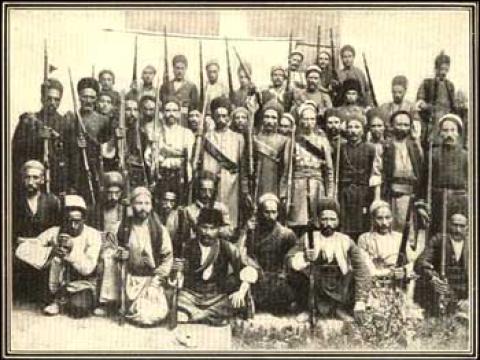
1907: Iranian General Strike During the instability of the Constitutional Revolution of 1907 Iranian workers launched a series of strikes to achieve reforms, particularly…
1919: Peru General Strike for the 8 Hour Day A strike by male Peruvian textile workers for a universal 8 hour work day and pay increase spread throughout the Peruvian economy.
The bloody May of 1936 in Thessaloniki, Greece A general strike of the tobacco workers and other unions on May 8th 1936 led to the bloody events of May 9th. The police confronted the massive…
Poland: Protests but no strike On September 14, mass protests were held in Warsaw against recent anti-labour legislation. Unfortunately the unions did not call a strike.
Mayday, the 8-hour movement and the Knights of Labor - Jeremy Brecher Jeremy Brecher's account of the growth of the Knights of Labor union in the US, the agitation for a…
Poland does away with the 8-hour day The avant-garde of neoliberal horrors has finally done away with the 8-hour working day.
Autobiographies of the Haymarket martyrs The full autobiographies of each of the Haymarket martyrs: eight Chicago anarchists who were sentenced to death and in whose memory we celebrate…
Iowa: Statewide Strike for the Eight-hour Day, 1891 Description of the 1891 miner's strikes for the eight-hour day in Iowa. From underground newspaper Free Flowing (February 1977), published out of…
"Dynamite... That’s the Stuff" - Louis Adamic Selections from Chapter 2 of "Dynamite: the Story of Class Violence in America" on the condition of the American working class in the late 19th…
The eight hour day in 2008 In this feature, published by Freedom Press for Mayday 2008, Rob Ray investigates how the campaign for the eight hour day has progressed since the times of the Haymarket Martyrs.