The 'bloodbath' in Vietnam [is] just a myth - Howard Zinn A short article by Zinn, appearing in the Boston Globe after the fall of Saigon, in which he…
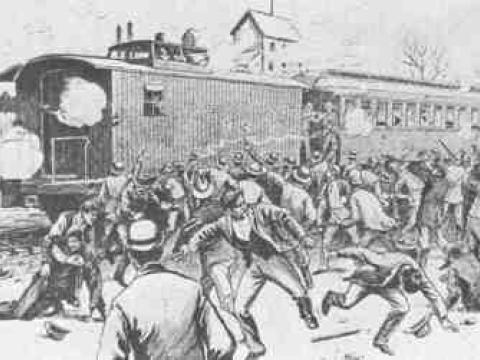
La grève des chemins de fer Pullman en 1894 - Howard Zinn Howard Zinn à propos de la lutte militante par les travailleuses dans l’entreprise des chemins de…
Lincoln and Emancipation - Howard Zinn Historian Howard Zinn on Abraham Lincoln and the eventual abolition of slavery in the US. Which shows that Spielberg's new film, Lincoln, is far…
Reexamining the Sacco-Vanzetti Case - Howard Zinn The LA Times reported in December 2005 that Upton Sinclair had allegedly written in a letter that an attorney for Sacco and Vanzetti, Fred Moore,…
Sacco and Vanzetti - Howard Zinn An article by the late Howard Zinn on the significance of the lives and executions of Nicola Sacco and Bartolomeo Vanzetti today.
The condition of women in America, 1619-1851 - Howard Zinn Howard Zinn on the position of women and the struggles of working-class women for equality from the…
A people's history of the American revolution - Howard Zinn Howard Zinn's critical history of the American Revolution against British rule and its impact on…
1619-1741: Slavery and slave rebellion in the US - Howard Zinn Howard Zinn's history of slavery and slave revolts in the United States from 1619 up until 1741.
Columbus, the Indians and the 'discovery' of America Howard Zinn on the "discovery" of America, the treatment of the native population and how it was justified as "progress".
Howard Zinn, celebrated radical historian, dies at age 87 A short obituary for the legendary historian, peace activist, and radical thinker Howard Zinn.
A people's history of World War I - Howard Zinn Historian Howard Zinn's account of US involvement in World War I, the reasons behind it, and working class resistance to it.
World War II: a people's war? - Howard Zinn Historian Howard Zinn critically analyses the conception that World War II was really a "people's war" against fascism, as opposed to yet another…