KAPD
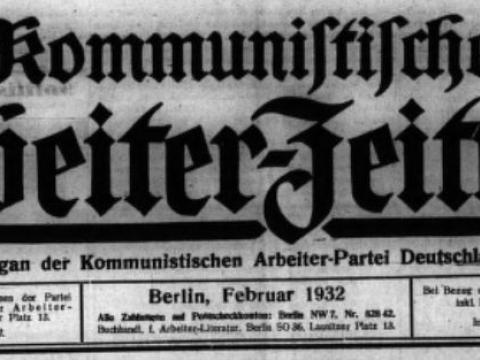
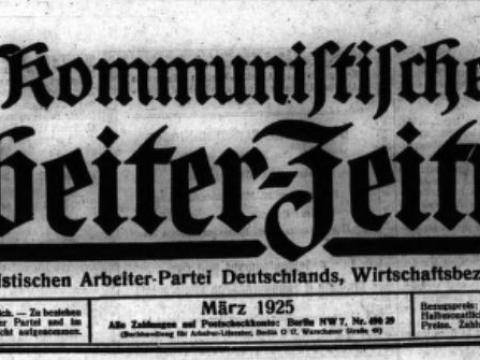
Kommunistische Arbeiter-Partei Deutschlands (Communist Workers Party of Germany), a councilist split from the Communist Party in 1920 who would be instrumental in defining the German-Dutch model of left communism.
Interventions by the KAPD at the 3rd Congress of the Communist International (1921), parts 1-5; Part Five: Declaration Presented at the Conclusion of the Interventions of the KAPD
Declaration presented at the conclusion of the interventions by delegates of the KAPD at the Third Congress of the Communist International in 1921.
We protest with extreme firmness the attempt to put us in the same sack as the Dittmanns and Serratis by means of some quotations taken out of context.
Interventions by the KAPD at the 3rd Congress of the Communist International (1921), parts 1-5; Part Four: Discussion of Lenin's Report on the Tactics of the Russian Communist Party
Interventions by delegates of the KAPD at the Third Congress of the Communist International in 1921 in response to Lenin's report on the tactics of the Russian Communist Party
HEMPEL(Jan Appel): It is first necessary that I ask something of comrade Radek who is apparently absent (cries: he is there). I ask comrade Radek to spare us his jokes in identifying us with the Mensheviks, because these jokes when they become repeated often become ridiculous.
Interventions by the KAPD at the 3rd Congress of the Communist International (1921), parts 1-5; Part Three: Discussion of Trotsky's Report on the World Economic Situation
Interventions by delegates of the KAPD at the Third Congress of the Communist International in response to Trotsky's report on the world economic situation.
SACHS(Alexander Schwab): The expositions that I have to give here do not simply concern comrade Trotsky's discourse here; they concern, all the same, if not more so, the theses that he jointly presented with comrade Varga.
Interventions by the KAPD at the 3rd Congress of the Communist International (1921), parts 1-5; Part Two: Discussion of Zinoviev's Report on the Trade Union Question
Intervention by delegates of the KAPD at the Third Congress of the Communist International in 1921 in response to Grigory Zinoviev's report on the trade union question.
BERGMANN (MEYER): Comrades, yesterday, in his report, comrade Zinoviev insisted on the fact that the question of attitude vis-a-vis the trade unions has a preponderant importance for the development, for the progress of the revolution.
Interventions by the KAPD at the 3rd Congress of the Communist International (1921), parts 1-5. Part One: Discussion about Radek's Report on the Tactics of the International
Interventions by members of the KAPD at the Third Congress of the Communist International in 1921 in reply to Karl Radek's presentation on the tactics the CI should employ.
HEMPEL (Jan Appel): Comrades!
Schneider, Ernst Wilhelm 1883-1946??1970??) Aka Ikarus, Icarus
A short biography of the German revolutionary seaman Ernst Schneider
Born in Königsberg in Prussia (now the Russian enclave of Kaliningrad) on 23rd July 1883 Ernst Schneider was a harbour worker and seaman (steersman).
Theses on the Role of the Party in the Proletarian Revolution (KAPD, 1921)
The KAPD’s Theses on the Party were written in July 1921 to be discussed not only in the party but within the Communist International.
1. It is the historical task of the proletarian revolution to bring the disposal of the wealth of the earth into the hands of the working masses, to put an end to the private ownership of the means of production, thus rendering impossible the existence of a separate, exploiting, ruling class.
Schwab, Alexander aka Sachs, 1887 -1943
A short biography of council communist and organiser of underground networks, Alexander Schwab, who died in a Nazi concentration camp.
Born on the 5th July 1887, at Stuttgart, Alexander Schwab was the son of a choir master. He studied at the Universities of Rostock, Jena, Heidelberg and Freiburg in philosophy, ancient languages, political economy and sociology. He was a member of the Free Students movement.
Weiland, Alfred, 1906-1978
A short biography of council communist, organiser of underground network, Alfred Weiland, kidnapped by the East German state in the post war period
Alfred Weiland was born on 7th August 1906 in the Moabit district of Berlin. He apprenticed as a fitter. He later worked as a telegraph worker.
In 1925 he was for a short time a member of the Nazi Party (NSDAP) which in Berlin had a more “left” outlook than elsewhere. Soon after he joined the communist KAPD and AAU.