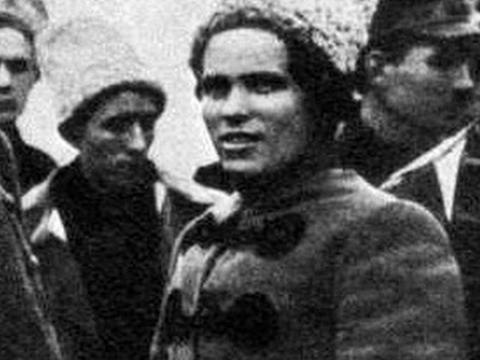
The Makhnovshchina and Its Aftermath The Makhnovist movement, or Makhnovshchina, was an attempt by revolutionary peasants in South-Eastern Ukraine to construct an anarchist society…
The Russian Revolution in Ukraine (March 1917 — April 1918) This is the first volume of his memoirs which covers the two Russian revolutions of 1917 and the…
The Ukrainian Revolution (July - December 1918) The third volume of Nestor Makhno's memoirs, first published in 1937; this is the first appearance of the work in English, published by Black Cat…
Under the Blows of the Counterrevolution: April-June 1918 This is the second volume of Nestor Makhno's memoirs, originally published in France in 1936 and…
Lyuty, Isidor (Petya) Efimovich (1896-1919) A short biography of the intrepid anarchist communist and Makhnovist Isidor Lyuty.
The Ukrainian roots of the 1936 Spanish revolution This article from the CNT-AIT of France looks at the connections between the Makhnovshchina and the anarchist revolution in Spain.
Nestor Makhno. The Last Years of Living Abroad - FISU After Nestor Makhno and others from the Makhnovist movement were forced into exile in 1921 they…
“Destroy the Makhno movement” - The Bolsheviks’ secret war against Nestor Makhno and his insurgents - Volodymyr Horak How the Bolshevik state intelligence services tried to destroy the Makhnovist…
A Communist Left Critique of Platformism (Part II): The Platform and its Disciples In Part I we examined the Free Territory, or Makhnovshchina, the revolutionary movement in Southern…
A Communist Left Critique of Platformism (Part I): The Makhnovshchina Many over the years have pointed out the apparent similarities between Platformism and the Communist…
Schwartzbard, Shalom (1886-1938) Short biography of Jewish anarchist poet and participant in both 1905 and 1917 Russian revolutions Shalom Schwartzbard, who carried out a revenge…