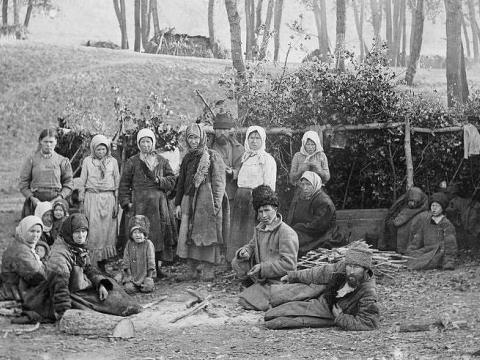
The Agrarian Question in the Russian Revolution: From Material Community to Productivism, and Back Loren Goldner in Insurgent Notes #10.
Program of the Workers' Organization of the People's Will Extracts from the People's Will program prepared for its working-class members, written sometime in…
A Critique of Philosophical Prejudices against Communal Ownership - Nikolai Chernyshevsky Extracts from Chernyshevsky's 1858 article criticizing the contemporary views on…
The People and the State - The People's Will An abridged editorial article that appeared in the second issue (No. 2) of the People's Will newspaper Narodnaya Volya, dated 15 November 1879…
Program of the Executive Committee of the People's Will One of the versions of a program published by the Executive Committee of the Social Revolutionary…
Letter from the Executive Committee of the People's Will to Karl Marx A letter, written around 1880, to Karl Marx from the Executive Committee of the Russian Social…
What is to be done? - Nikolai Chernyshevsky Novel by Russian socialist/revolutionary Nikolai Chernyshevsky, written while being detained at the Peter-Paul Fortress by Tsarist authorities…
Roots of revolution: a history of the populist and socialist movements in nineteenth century russia - Franco Venturi An extensive work on Russian narodism/socialism spanning from the Revolutions of…
On social relations in Russia - Friedrich Engels Pamphlet by Engels responding to an "open letter" by the Russian revolutionary Pyotr Tkachev, in which Tkachev had criticized Engels'…
Gavur Imam: The “sung” hero of Cypriots Article about Gavur Imam Revolt that was published in News & Letters.
Late Marx and the Russian Road - Teodor Shanin Text by Shanin on Marx's (and Engels') Russian writings, including a number of primary sources relating to the Narodnik movement in Russia.
Peasant patterns of resistance - Peter Kolchin Extracts from a chapter of historian Peter Kolchin’s book Unfree Labor, describing a few instances of a type of serf-resistance in Imperial…