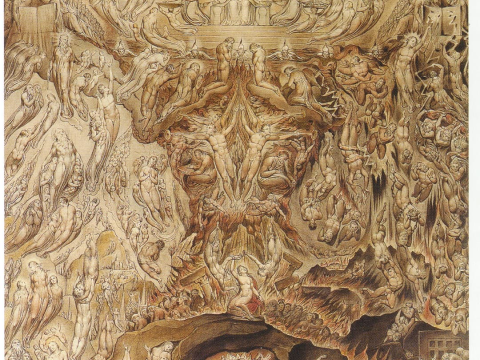
state
From party politics to service delivery to the politics of the poor
Philani Zungu's article arguing against the lip-service of politicians of 'service delivery' to South Africa's poor.
I hope that one day it will be realised by our government officials how much betrayal they have served to the floors on which they stand and where they belong. It is very sad that our politicians forget that their power started with people like us, people like the red shirts.
Absolute Property - G. Kay & J. Mott
An analysis of the nature and development of private property in relation to the state in class society, and the political prevention of the abundance that modern productive capacities make possible.
"[i]If the productive capacities already deployed were oriented towards need, necessary labour would be reduced to a minimum, so that nothing would stand between men and what they need to live. Money and the law of labour would lose their force, and, as its foundations crumbled, the political state would wither away.
War is the health of the state - Randolph Bourne
This classic first part of an essay entitled "The State," left unfinished at Bourne's untimely death in 1918, it explores the connection between patriotism, war, and the State.
To most Americans of the classes which consider themselves significant the war [World War I] brought a sense of the sanctity of the State which, if they had had time to think about it, would have seemed a sudden and surprising alteration in their habits of thought.
The Trial - Franz Kafka
Franz Kafka's seminal novel, telling the tale of Joseph K, a respectable functionary in a bank, who is suddenly arrested and must defend his innocence against a charge about which he can get no information.
Text originally from Project Gutenberg. Available as a pdf file below.
Asbo your neighbours!
A member of one of London’s most experienced community action groups has hit out against the ‘hidden agenda’ of a new measure to give ASBO powers to Tenant Management Organisations.
A member of Haringey Solidarity Group, speaking to Freedom Anarchist newspaper, has condemned the government initiative as a cheap attempt to head off a growing community movement throughout the UK resentful of relentless losses of and cuts to services. He said: “. From the community angle anti-social behaviour is a real issue and it’s true it can have a disproportionately large effect.
Intakes: 'Rostock or: How the New Germany is being Governed'
In this abridged translation of an article originally published in Wildcat (Germany), it is shown how the state is using the issue of racism to develop its 'social strategy of tension'.
Biopolitics: Between Terri Schiavo and Guantanamo - Slavoj Žižek
Žižek draws on Giorgio Agamben's notion of Homo sacer - someone who is biologically alive but deproved of all rights - in order to understand the rationales and causes of the 'war on terror'.
On security and terror - Giorgio Agamben
"We can say that politics secretly works towards the production of emergencies." A short article written in response to the 9-11 attacks by the philosopher Giorgio Agamben published in Frankfurter Allgemeine Zeitung [Frankfurt general newspaper] September 20, 2001.
Security as leading principle of state politics dates back to the the birth of the modern state. Hobbes already mentions it as the opposite of fear, which compels human beings to come together within a society. But not until the 18th century does a thought of security come into its own.
Panopticism - Michel Foucault
“Is it surprising that prisons resemble factories, schools, barracks, hospitals, which all resemble prisons?” This is chapter 3 of Foucault’s seminal work Discipline and Punish, which details the growth of surveillance and disciplinary power alongside the utilitarian logic of early capitalism.
From Discipline & Punish: The Birth of the Prison (NY: Vintage Books 1995) pp. 195-228 translated from the French by Alan Sheridan © 1977
The following, according to an order published at the end of the seventeenth century, were the measures to be taken when the plague appeared in a town.
Creating a new public sphere, without the state - Paolo Virno
[b]This interview illustrates the move amongst the post-Leninist Italian radical left towards an anarchist view of the state, as well as Virno’s insistence that the concept of ‘multitude’ does not replace the concept of ‘working class’ and his controversial assertion that fear and insecurity – which he calls ‘precarity’ – define the globalised world.