syndicalism

Syndicalism is from the French word for trade unionism. In English syndicalism refers to the theory and practice of rank-and-file unionism, where decisions are made from the bottom-up.

A Country Considered to Be Free - New Zealand and the IWW

"Towards a Transnational Study of New Zealand Links with the Wobblies", an essay by Mark Derby which looks at New Zealand's relationship with the IWW.

In the 1890s a New Zealand watersiders’ leader announced to his members, “We have no flag, we have no country.”[1] He was declaring the internationalism of labor at a time when patriotism and imperialism then characterized the population.

Syndicalism - an introduction

Syndicalism refers to the practice of organising workers into unions to fight for their interests. Originally, the term comes from the French work for Trade Unionism (Syndiclisme), but in English the term specifically refers to rank-and-file unionism.

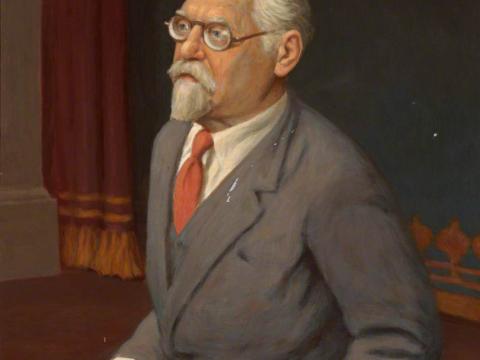
Syndicalism: What It Is - Gaylord Wilshire

Brief explanatory article by Gaylord Wilshire (1861-1927). Known as the "millionare socialist", Wilshire served as emergency editor of The Syndicalist and was a friend of Emma Goldman

SYNDICALISM: WHAT IT IS

by Gaylord Wilshire

Emergency Editor of April and May 1913 numbers of "The Syndicalist" during the imprisonment of Guy Bowman
Price: One Penny / Two Cents

The Industrial Workers of the World in Australia - Ian Bedford

A short critical, but generally sympathetic, assessment of the Australian Wobblies.

From; Labour History no. 13, (Journal of the Australian Society for the Study of Labour History), Nov. 1967.

THE INDUSTRIAL WORKERS OF THE WORLD IN AUSTRALIA
IAN BEDFORD

Memoirs of the I.W.W. [Australia] - Bill Beattie

Recollections of struggles in the years around the First World War - by a former Australian Wobbly.

From; Labour History no. 13, (Journal of the Australian Society for the Study of Labour History), Nov. 1967.

MEMOIRS OF THE I.W.W. [Australia]
Bill Beattie

Counter-revolution and the Soviet Union - Gregori Maximov

The Red Army enter Tblisi, February 1921

Short essay by famous Russian anarchist, Gregori Maximov, on the defeat of the 1917 revolution by counter-revolution from within.

Taken from the Bulletin of the Kate Sharpley Library, No. 14 (March 1998), can also be found on the KSL website here.

Principles of Syndicalism - Tom Brown

IWW syndicalist Elizabeth Gurley Flynn speaks, Lawrence strike 1912

Written by the well known activist and propagandist Tom Brown, the article explains clearly the principles according to which syndicalist unions organise, and the new society they aim to create "within the shell of the old".

This simple introduction to syndicalism, workers control and libertarian communism originally appeared as a series of articles in War Commentary for Anarchism in 1943.

Contents
1. Not Centralism - But Federalism
2. Economic Federalism
3. Abolition Of The Wages System
4. The End Of The Money Trick
5. To Each According To His[/Her] Needs
6. Workers' Control of Distribution

Anarcho-syndicalism - an introduction

CNT workers demonstrate during the Mercadona supermarket strike, 2006

A short explanation of anarcho-syndicalism and notes on its history.

Anarcho-syndicalism is one of the major forms of social anarchism. The idea behind anarcho-syndicalism is to combine the economic methods of syndicalism with the revolutionary politics of anarchism.

1816-1939: Syndicalism in South Africa

A short history of radical trade unionism, class struggle and race in Southern Africa in the 19th and 20th centuries.

The Industrial Workers of the World (IWW), and the ideas, goals and organisational practices for which it stood, had an important influence on the early labour movement and radical press in South Africa. It also had an impact on neighbouring Namibia, Zambia and Zimbabwe.

1917-1921: The Industrial Workers of Africa

IWW

The history of four years of the revolutionary multi-racial union in South Africa, the Industrial Workers of Africa, and the labour movement at the time.

"Fight for Africa, which you deserve"

Johannesburg, South Africa. May 1918. A group of African workers, and a handful of white radicals, meet in a small room behind a general store on the corner of Fox and McLaren streets, as they have done on a weekly basis for over a year. Several new faces are present, so Rueben Cetiwe, a key African militant, outlines the purpose of the gathering:

Syndicate content