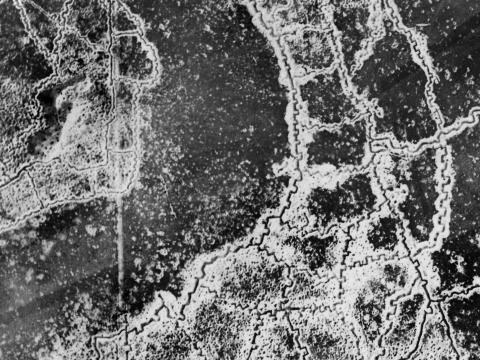
World War I

Mollie Steimer, 1897-1980 - Paul Avrich

Mollie Steimer

The life of Mollie Steimer, a Jewish anarchist in New York who opposed the First World War, and later lived in exile in France and Mexico.

Mollie Steimer: An Anarchist Life
By Paul Avrich

Memoirs of the I.W.W. [Australia] - Bill Beattie

Recollections of struggles in the years around the First World War - by a former Australian Wobbly.

From; Labour History no. 13, (Journal of the Australian Society for the Study of Labour History), Nov. 1967.

MEMOIRS OF THE I.W.W. [Australia]
Bill Beattie

The Hungarian Soviet Republic of 1919: The Forgotten Revolution - Alan Woods

Hungarian Soviet Republic

Trotskyist Alan Woods on the Hungarian uprising of 1919. Wood's account suffers from the usual analytical errors by Trotskyists but is included for reference to these little-known events.

November 12, 1979

Glasgow and the Wobblies

Workers' riot in George Square, centre of Glasgow, 1919

The Industrial Workers of the World's influence in Glasgow is not so well known, but it had considerable influence on the shop stewards movement in the period around the First World War:

"It was perhaps a natural development that one of the strongest branches of the Advocates of Industrial Unionism should be in the Singer Sewing Machine Works at Kilbowie, Clydebank, which employed some 12,000 workers. Singers was primarily an American firm, but it had established itself in Europe, and exerted an effective monopoly in the manufacture of sewing machines.

War is the health of the state - Randolph Bourne

This classic first part of an essay entitled "The State," left unfinished at Bourne's untimely death in 1918, it explores the connection between patriotism, war, and the State.

To most Americans of the classes which consider themselves significant the war [World War I] brought a sense of the sanctity of the State which, if they had had time to think about it, would have seemed a sudden and surprising alteration in their habits of thought.

1915-1920: Red Clydeside and the shop stewards' movement

clydeside.jpg

An account of the powerful workers' movement in Scotland and the strike of 100,000 for a 40-hour week in 1919 which was savagely attacked by the government on what became known as Bloody Friday.

Although unemployment decreased slightly in the few years immediately preceding the beginning of hostilities, inflation rose dramatically, increasing the prices of foodstuffs, rents and fuel, but decreasing workers’ wages by 15%. While conditions at work were fairly miserable, workers had to return to bad housing where overcrowding was not uncommon and disease rampant.

1895-1921: The CGT, France

The CGT today

A history of the anarchist origins of the largest trade union in France and the development and decline of revolutionary ideas and practice within it.

Revolutionary Syndicalism in the French CGT

1915: The Glasgow rent strike

Rent strike demonstration, Glasgow 1915

The history of a months-long rent strike of 30,000 Glasgow residents against profiteering landlords, forcing the government to freeze rents for the duration of World War I.

During the First World War, rent increases across Glasgow provoked massive working class opposition, mainly from women organised in tenants’ groups. Their struggle against profiteering landlords during extremely difficult circumstances is a valuable example of how collective action really gets results.

1919: The Calais mutiny

british-army-ww1.gif

A short history of the strike and mutiny of British troops stationed in France following the end of the First World War which won concessions and helped speed up demobbing.

As the end of World War I was nearing, the British Army was being used more extensively in France, as the French military had largely disintegrated due to widespread mutiny. However, as time progressed, British soldiers were proving equally unwilling to fight and to obey.

1919: The RAF Biggin Hill mutiny

A short history of the victorious rebellion of British servicemen in the air force who were living in appalling conditions, soon after World War I.

1919: The Southampton mutiny

southampton.jpg

A history of the militant rebellion of British troops in Southampton following the end of the First World War. Amidst the widespread dissatisfaction, the men were highly reluctant to return to Europe after the end of the conflict.

1918-1930: Mutiny and resistance in the Royal Navy

Indiscipline - HMS Revenge in 1914

A short history of mutinies and rebellions in the British Royal Navy and Marines from the end of World War I, Russian Revolution and up until 1930.

Whilst the mutinies in the German and French Navies in the First World War have been well documented little information is available concerning the British Royal Navy. There was, however, considerable talk of mutiny at Portsmouth, in the summer of 1918.

1917: The Etaples mutiny

A short history of one of the early big mutinies of British troops in Europe as World War I came to an end.

Etaples, about 15 miles south of Boulogne, was a notorious British Army base camp for those on their way to the front. Under atrocious conditions both raw recruits from England and battle-weary veterans were subjected to intensive training in gas warfare, bayonet drill, and long sessions of marching at the double across the dunes.

1919: The Luton riots

luton-town-hall.jpg

The history of the riots which flared up in Luton. Ex-servicemen and their families, angered by extravagant publicly-funded victory celebrations while they were unemployed and poor, took to the streets in protest.

Peace comes to Luton!

In the summer of 1919, as the local Council launched extravagant celebrations of the war’s end, angry ex-servicemen demanding work took to the streets.

14. War Is the Health of the State

"War is the health of the state," the radical writer Randolph Bourne said, in the midst of the First World War. Indeed, as the nations of Europe went to war in 1914, the governments flourished, patriotism bloomed, class struggle was stilled, and young men died in frightful numbers on the battlefields-often for a hundred yards of land, a line of trenches.

Sharpley, Kate, 1891-1978

Kate Sharpley

Brief biographical information about London resident, anarchist and World War I-widow, Kate Sharpley who once attacked Queen Mary.

Albert Meltzer first met Kate Sharpley on the day of the Lewisham anti-National Front riot in 1977 when he got into an altercation with some racists on the train home. One of the passengers was a frail lady in her eighties, going up to Guy's & St.

Origins of the Movement for Workers' Councils in Germany

Pamphlet on the origins of the Movement for Workers' Councils in Germany, covering the 1918 revolution and its aftermath and activites and reactions of left and libertarian communists.

Written by the Dutch Group of International Communists (GIK), with an introduction by Dave Graham.

Why past revolutionary movements have failed

Anton Pannekoek

Anton Pannekoek, from "Living Marxism" Vol. 5, # 2 - Fall 1940.

Thirty years ago every socialist was convinced that the approaching war of the great capitalist powers would mean the final catastrophe of capitalism and would be succeeded by the proletarian revolution. Even when the war did break out and the socialist and labor movement collapsed as a revolutionary factor, the hopes of the revolutionary workers ran high.

Syndicate content