A report on youth revolts in Italy in 1977, from London-based anarchist-feminist magazine Zero.

Italy has about a million university students, a high proportion of them come from working class backgrounds, and more than six hundred thousand graduates looking for their first jobs. The Andreotti Government, backed by the Italian Communist Party (the one party Christian Democrat Government kept in office thanks only to outside support from the PCI) intends, with the help of the unions, to cut back the growing numbers of university entrants with educational 'reforms' which would increase the length of university studies, restrict the number of courses open to students and put up the cost of studying.
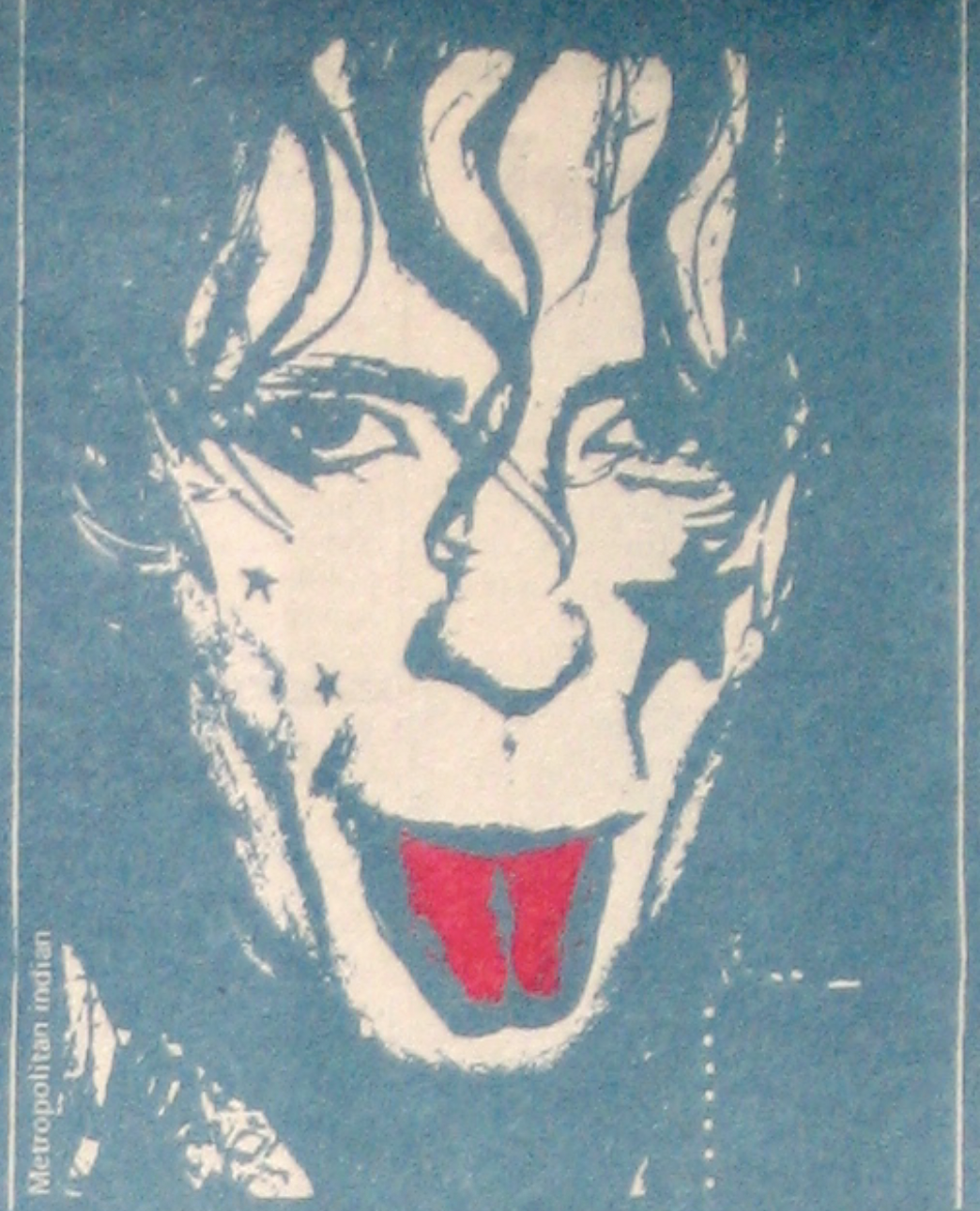
For some time now Italian youth and students have been living out a new situation reminiscent of May '68, responding militantly to the provocations of the trade union bureaucracies and the police. Once again the struggle is being carried out not by the recognised groups of the left, but by non—aligned groupings which have sprung up spontaneously in the recent months. Together these groupings, Autonomla Operaia (autonomous workers), Circoll Giovalli, (youth circles), the Metropolitan Indians and the autonomous feminist groups form a movement that represents a new wave of autonomous struggle. Fernando Mir reports the assault on the poverty of Italian urban life.
Milan
Milan December 7 1976. The city centre was a fortress defended by 5000 policemen, plus the anti-terrorist brigades: an unprecedented display of force. The object was to defend was to defend the opening night of "Othello" at La Scala. (In 1968 a thousand students outside La Scala bombarded the elegantly , dressed patrons with rotten eggs.) This time the protestors were the "Proletarian Youth Circles" who were provoked by the fact that the same people who were calling for sacrifice upon sacrifice to save the Italian economy had paid astronomical sums (100,000 lire per ticket) to attend the opera.
A similar action had taken piace on October 31 when six hundred members of the "Proletarian Youth Circles" seized a packet of 2,500 lire tickets for a cinema showing Bernardo Bertolucci's "1900" and sold them at the political price of 500 lire. The activities of Operaia Autonomia, which organised "re-appropriations" at the expense of large supermarkets, shops and cafes in the city centre, had a greater impact. The following week groups from the outskirts of Milan and its dormitory-suburbs decided on joint action. On Sunday November 7th, 3,000 people had descended on the Piazza Vetra, Milan taking the police, who were prepared for a routine operation, completely by surprise. Bursting into four cinemas, they soon mounted a demonstration some 4,000 strong.
Following this, a price reduction was proposed for matinee performances. This response was a new demonstration, the time involving 52 of Milan's "youth circles", with their banners decorated with garish colours and drawings, the Apache emblem (a hatchet) in the forefront, flags, guitars, the pink and flowered flags of the feminst and gay groups.
The movement is contradictory, apparently heterogenous, made up of young people who "want to meet together" and who reject both the traditional left and the mimicry of the extreme left.
The autonomous elements fought back in the assemblies asserting their real needs, their desire for a better life, the importance of occupying houses, the refusal to sign away their whole lives for a wage. "We are coming out of the ghettos. We shall reconquer the city." Assemblies inside and outside the university, spontaneous festivities, occupation of the railway station... "Enough of the patience; from now on we shall be violent..."
The assembly turned into a festival, the festival turned into an itinerant assembly. Murals began to appear, theatre in the streets, actions of all types.
And off the campus the new police force, i.e. the union marshalls, let rip at anything smacking of "autonomy", long hair, beards, colourful or untidy clothes, army surplus bags, etc.
Feb 17 1977. 50 000 Young people come out on the streets to demonstrate their refusal to accept any "historic compromise", any bureaucratic mediation as a solution to their problems: unemployment, the yearning for a free life, the rejection of all forms of authority, etc. Indians, homosexuals, unemployed, autonomous groups... Here, then, is a difference between the young people of '68 and the Metropolitan Indians, the feminists and the ex-militants of leftist groups. The former were the beginning of a quantitative and qualitative renewal of the revolutionary movement; they took the first steps, and they saw in Cohn Bendit and others the spokesmen of the revolution. Today, the fringe groups of 1977, the homosesuals, the feminists, the unemployed, the autonomous groups, the anarchists, have no representatives. They have sometimes even gone so far as to forbid any comrade to give interviews or speak on behalf of the movement. The movement must find its expression only in the assemblies and in the streets, through the different and equally important voices of all who have something to say. No bureaucracy, not even symbolic. No vanguard, just autonomous action.
These groups are impregnanted with the practice of direct action and libertarian ideas, but this does not define them exactly. Nor do the groups themselves feel the need for a precise definition beyond the expression of originality in word and action. Listen to one of the Metropolitan Indian who made themselves felt last winter in Milan by taking the bourgeoisie to task in the famous Milanese arcades.
"Our aim is to destroy the world of serious politics, which has nothing to do with life and happiness. We are tired of intoning 'workers power' when nobody wants to give power to the workers. Thursday in the university of Rome, the PCI militants agreed to protect Lama [General Secretary of the Generale Italiana Dilavoro, communist controlled trade union confederation] because he told them there would be some fascists for them to beat up1 . But when they heard our slogans they began to smile. Inspite of Lama they are still human beings. That's why we take slogans, to show people that a slogan is nothing but empty words, no more than a noise. It can help us laugh together and help toward changing political activity social life. It's no longer enough to stand up and be counted - we need to sing...
We want jobs fit for human beings, neither alienating nor badly paid. Jobs that leave us time to play and be together. We want houses for all, open houses, spacious houses, without anxieties or families. I belong to the lower middle class, a new class which is to the middle class what the sub-proletariat is to the working class. My father is a minor civil servant; I am i man who is desperate ... We want a society that builds houses, not churches; doctors that prevent illness rather than cure it, workers who are craftsmen, artisans, instead of factories.... I don't like disorder but I know that it's inevitable, that it's the only way of living like a human being in a society in which order means organising humanity. The destruction which the Metropolitan Indians are preaching is nothing but self-defence, a defence against the outside world."
The autonomous groups formed by ex-members of the my leftist parties express themselves like this former militant of Lotto Continua [Continuous Struggle Extra-parliamentary left group with politics similar to Big Flame]
"Those who call us apolitical make me laugh. Politics longer exists, if it ever did. What does the PCI mean to me? I wouldn't have thrown bricks at Lama on Thursday February 17. I would have climbed up on the platform, taken him in my arms and kissed him. They were looking for a fight. Bricks are what they wanted. A passionate kiss would have destroyed him. That's what we have to do, destroy the whole thing without being afraid of our own madness ... "
A woman from the autonomous Feminist groups:
"During the lest few years of long hard struggles against the male state we have learned to make no distinction between work and sex. The self help we have been practising for some time now has led us to refuse, once and for all, the idea that anyone or any group should be the compulsory mediators of our daily work. We women are the foremost outcasts of this shitty society. We chose to fight alone, or almost, for abortion, for women's control of abortion, to force doctors not to refuse to perform abortions for so-called reasons of conscience, etc.... At he same time, I reject the label of woman-mother, which simply boils down to double exploitation of women - of reproductive woman, who provides society with its labour force, and of supposedly emancipated woman, whose task is to create a situation where women are no longer the rincipal outcasts. That's why I am taking part in this movement, as a woman and also as one of the unemployed with the obligation of not submitting to the black labour market... I feel optimistic: May '68 was the revolution if the privileged, the sons of well-to-do parents. February '77, on the other hand, is mainly the revolt of the desperate, the unemployed, of today and tomorrow, the proletarians. And it will continue, I am sure, even if it takes time to change things."
After the death of Francesco Lorusso [Lona Continua militant shot by police in demonstration March 11] Bologna was in a state of siege. On Saturday March 12, a police station was attacked in Turin and 4,000 people demonstrated in the streets. In Milan, an explosive device went off in a carabineri barracks. On the same day 10,000 demonstrators took to the streets of Milan and Molotov ocktails were thrown. At Milan university, as in other faculties throughout Italy, the break between the communist youth and the extreme left was already quite clear on the Friday. Saturday's demonstration was violently anti-PCI and anti-union. Typical slogans chanted by the demonstrators were:
"Sacrifice yourself Lama, we don't feel like sacrifices."
"The PCI with the bosses that's real provocation."
Manifesto of the Youth Circles
(Adopted at the National Congress) "What we do: react gainst revisionist temptations, carry out occupations and seIf-reduction of prices in cinemas; fight against heroin, oppose bourgeois culture, denounce youth unemployment black market labour and over-exploitation of marginal abour.
What we want: more creativity at the workplace and in he working-class districts, a more energetic critique of oId-style militarism, the satisfaction of our need to be something, of our desire to redeem our role. The tribe of the outcasts, freaks and young proletarians of all Italy is advancing on Milan.
Two days of play, discussions, music etc... the thirst for life, for a total exchange of experiences. We danced long around the great totem pole during the season of the straw berries. We have crossed the green prairies, we saw the great mountains, we have travelled the paths without rest until at last we came upon the great salt lake in the seasons of the hot colours.
Now the rainy season has come, the rain that blurs the colours We need warmth; we need to remain together to live in happiness during the cold season.
The greycoats [police] have denied us everything. They pursue us with their cold eyes. They wish to engulf us in the chaos of this city. They open their huge pig jowls to swallow us up in their rotten ghettoridden guts.
But the wind of our despair will blow ceaselessly in the greycoats' ears, Our wrath will rattle their tin-can brains. their terror will take on the colours of our tenderness. Their disdain will increase our forces; their presumption will destroy them. WE have dug up the hatchet.
Never again shall we smoke the pipe of peace with the greycoats."
Rome
After the expulsion of the communist Lama from the university, the Rome movement proclaimed: "We have hunted down General Lama, but this will not be our Little Big Horn." The Minister of the Interior, following the Indian terminology, had this to say:
"We shall not allow our country to be turned into the Wild West. The university shall not become a stronghold of Metropolitan Indians, freaks and hippies."
The whole movement reveals a desire to "transform life" and at the same time a certain despair that we see in the emergence of the Metropolitan Indians,
"The Indian thing is a pretext," says a student with fantastically painted skin, "by tomorrow we shall have disappeared or split up into a thousand tribes. Never mind. The important thing is that within the movement there is less talk, less ideology, more truth, a new form of political activity and, finally, new kinds of interpersonal relations."
Manifesto of the Metropolitan Indians
We demand: The abolition of borstals (as a step on the way to the abolition of all prisons).
The requisition of all empty buildings for the establishment of youth centres and communal alternatives to family life.
Public funds to be made available for the financing of alternative drug rehabilitation centres and all independently run cultural organisations.
The reduction of admission charges for the cinema, theatre, and all other cultural establishments to a level determined by the youth movement.
The total decriminalisation, irrespective of misuse, of marijuana, mescalin and LSD, including their distribution, use and development by the movement.
Wages For Laziness.
1km land for every person and animal.
The abolition of the age of majority so that all children that want to leave home are free to do so, even if they can only crawl.
The immediate release of all animals from flats and cages.
The destruction of zoos and the right of captive animals to return to their homelands.
The destruction of the Altar of the Fatherland [a monument in Rome] and its replacement with every kind of vegetation with space for animals and a lake for swans, ducks, frogs and fish.
The peoples assembly proposes to organise, starting in the community, anti-family militias to free young people, especially girls, from patriarchal tyranny. The Metropolitan Indians call upon all creative young people to organise a national happening of the young proletariat for the beginning of spring.
Approaching Drumbeats
The sound of the tom-tom has reached our ears at last. All the violence of our opposition to a world, a society encountered ready made that is constantly on our backs, is now erupting. "Not a revolution, you majesty, a mutation". A mutation that is finding its full expression in a moment of lucidity. Today we are violent, just as at other times we were silent detractors of a game that had nothing to do with our real lives. Suddenly we have discovered that we are many. We know that our strength is nothing in the struggle to change a whole society. Sometimes the only way out is to head for a new promised land. Nevertheless, we love our cities. Enough to think of creating our nation in a city that makes us outcasts, in a few houses on a single block...
We were hippies, or we felt ourselves their brothers at a given moment. We dreamt of California and the flowers, the groups, their life, until the system put it all on the market. We felt with the events of '68, and we imagined the barricades in our own streets. We put on war paint and gave free rein to our emotions and vibrated with our Italian '77. And we saw everything go under. We saw that once again the game was too strong for us to resist assimilation. We had despaired once again at the thought that Italy '77 had been yet another failure. But we were failed with joy in the end, when we realised that Italy '77 was, yet again with the cry of a people that will never be assimilated, whatever tricks the system may employ.
We raise our banner, and a single slogan remains engraved on our hearts: - "LET NO ONE PREVENT US FROM BEING OURSELVES"
Originally published in Ajoblanco #222 .
Translated Barry Smerin.
- 1Libcom note: For an eyewitness account of this incident, see "Lama Sabachthani".
- 2Libcom note: available as a PDF here: https://w.ajoblanco.org/revistas/ajoblanco-22
Comments