The Communist Workers' Party and Fourth International - Sylvia Pankhurst List of objects and methods of the left-communist Communist Workers' Party, appearing in the 11…
Notes from Pankhurst on Lenin's Pamphlet "Left-Wing" Communism: An Infantile Disorder Some notes from Pankhurst on Lenin's pamphlet "Left-Wing" Communism: An Infantile Disorder, which…
Socialism - Sylvia Pankhurst Article by Pankhurst describing her vision of a socialist society. The article appeared in the Vol. 10 No. 19 (28 July 1923) issue of the Workers…
What Socialism Is Not - Sylvia Pankhurst Article by Pankhurst describing what socialism is not, in which she emphasizes the importance of worker councils as the main instruments of…
Manifesto of the Unemployed Workers' Organisation The Manifesto of the Unemployed Workers' Organisation as it appeared in the Vol. 10 No. 16 (7 July 1923) issue of the Workers' Dreadnought. The…
Parliament, The People's Enemy - Clara Gilbert Cole "Now that so many of the workers have learnt that they are an Oppressed and robbed class, learnt through bitter experience, it seems cruel that…
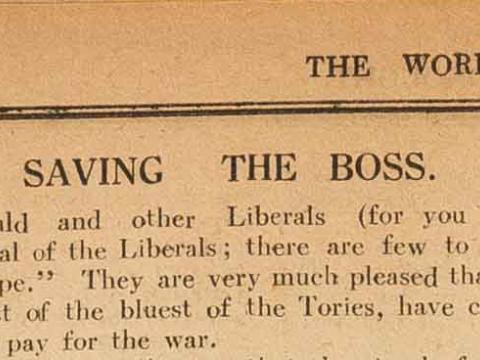
Saving the Boss - Sylvia Pankhurst Short article from the Workers' Dreadnought (17 December 1921) on the crisis of post-war German debt and hyperinflation. The article argued…
The Workers' Dreadnought Online archive of over 350 issues of this weekly suffragette and later left-wing communist newspaper founded by Sylvia Pankhurst, first appearing…
Labour Advice Bureau – Workers’ Dreadnought Here is a sarcastic piece from Sylvia Pankhurst’s Workers’ Dreadnought paper in 1922, it was reprinted as follows in 1961 by the UK-based…
A constitution for British soviets. Points for a communist programme - Sylvia Pankhurst Pankhurst outlines her vision of how a system of soviets might be applied to Britain.
You are called to the war - Sylvia Pankhurst Article in Workers' Dreadnought opposing the involvement of the Allied nations in the Russian Civil War.
Look to the future - Sylvia Pankhurst Sylvia Pankhurst discusses the limitations of the increased suffrage of the Representation of the People Act 1918.