
This article is about the current uprising of the Iranian people. it rejects those who do not consider success as important. Here are some important points in the importance of success.

Demonstrations and protests continue in Iran
By: Zaher Baher
01/01/2026
The Iranian protests have spread to nearly 30 cities and towns by the fifth day. Meanwhile, the gendarmerie and the Revolutionary Guards have responded with brutality and continue to repress the protesters through killing, arresting, and kidnapping them.
There are no exact figures, and no one knows how many people have been killed or injured, arrested, or kidnapped. What is clear, however, is that the people have gone beyond demonstrations and protests, and the movement has turned into an uprising. Likewise, their everyday demands about the rising cost of basic necessities have shifted into political demands, reflected in slogans such as “Down with the regime,” “Out, out, dictators,” “Women, life, freedom,” and many others.
Meanwhile, Iran’s president, Masoud Pezeshkian, claims that he is trying to talk to the protesters peacefully, saying that he is “listening to their demands, solving their problems, and wanting to meet their representatives and talk to them.” However, as Farhad, not his real name, a university student, said, “Only a fool would believe them. If they want to listen to us, why are they killing us in the streets? Why don’t they release the prisoners? Why don’t they change people’s lives?”
There is extensive reading and analysis among some of Iranian and Iraqi people about the current situation, much of which is pessimistic and even suggests that the outcome may be worse. These views are often justified by examples from previous years, such as Iraq, Egypt, Libya, and Syria. In addition, some leftists and Marxists argue that changing one regime for another will not improve the lives of workers.
Of course, just as uprisings are unpredictable, their outcomes will not necessarily follow our plans, wishes, or goals. What is clear is that the course of history cannot be stopped by anyone, and change often takes place beyond our will.
If the Iranian uprising succeeds, I believe there will be major changes not only in Iran but also across the region.
First, it will restore people’s will and confidence in themselves. When they are able to change a regime that has been in power for 47 years and has controlled all aspects of life, they will be able to change future rulers more easily. The people of Iran will gain valuable experience that can serve as an example for the whole world, especially the region.
Second, changes in Iran would lay the groundwork for change in Iraq, because it is widely believed in Iraq that Iran dominates and controls many aspects of the country and has diverted large amounts of Iraqi money to Iran and to pro-Iranian forces.
Third, the threat of Israeli and US attacks on Iran would disappear, even if only temporarily. This would not only prevent casualties but also restore a degree of security to the region for a period of time.
Fourth, the major Shiite and Sunni powers that confront each other will become better armed, boosting weapons and ammunition companies in developed countries. This also encourages the formation of armed groups in other countries to fight each other and be used as proxies against Israel and the United States. With a change of regime in Iran, these tensions would ease to some extent, even if only temporarily.
Fifth, the dependent political parties of the Iranian authorities would lose their logistical, ideological, military, and financial support, leaving them weakened.
Sixth, the weakening of nationalist and other authoritarian parties in Iran would occur, which is a very positive development.
Seventh, the Iranians’ 47-year experience with this regime makes it less likely that another religious regime will take its place, leading to significant improvements in the situation of women in Iran.
Eighth, it is clear that demonstrations and uprisings are always driven by basic necessities, rising prices, and lack of freedom, not by distant goals such as those envisioned by leftists and Marxists who aim to establish a workers’ government or a dictatorship of the proletariat. We must understand that people prioritize secure access to food and essential needs over the lofty slogans of authoritarian parties and organizations. People who are hungry, lack medical care, or cannot send their children to school cannot wait for a better labor or proletarian government; they need solutions immediately.
Undoubtedly, the points above are the main positives of a change in the mullahs’ regime in Iran. There are many other benefits that need not be discussed here. At the same time, the uprising could be silenced or suppressed, either through the control of political parties, which is unlikely, or through authorities negotiating with a few demonstrators chosen as envoys rather than electing delegates through mass meetings and direct democracy. Another significant danger is the involvement of US, European, Russian, and Israeli leaders, who have heavily influenced media coverage and openly supported the demonstrators.
In my opinion, and that of many others, the success of this uprising would be very positive. The people in Iran are highly conscious and experienced just as workers and citizens organized themselves during the 1978–1979 so-called revolution, they can now act with even greater experience, both in Iran and globally. They can make important decisions themselves through non-hierarchical assemblies in workplaces, universities, streets, and neighbourhoods, practicing direct democracy. Together, they can implement these decisions, work collectively, and establish cooperatives to manage and improve their own lives.
Doing this is necessary, and life shows that socialist or anarchist communities, whether small or large, can be created and serve as examples for other places and regions.
Let us hope that the people leading the uprising in Iran are taking these steps.



Comments
(No subject)
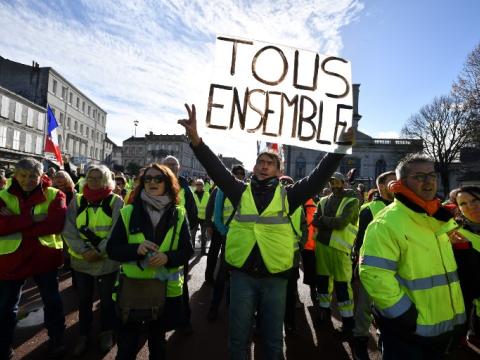
The insurgent proletariat, "the people leading the uprising in Iran are taking these steps":
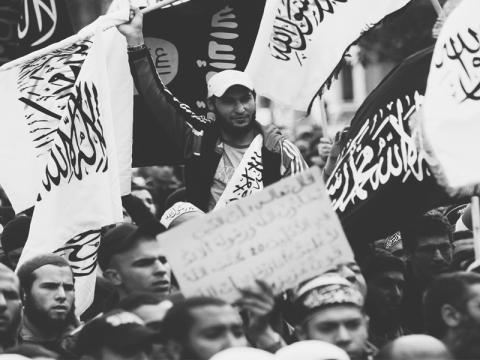
And "the Iranian people" peaceably marching to the call from small shopkeepers for regime change:
Iranian revolution, simmering for years, suddenly erupts when the proles realise that the Shar and the Czar, President and Prime Minister, are the same person. So it is for all.