Our delegation was based on an invitation from the Executive of the Third International to the "Opposition" to send two delegates to Moscow. The "Opposition" had since merged into the "Communist Workers' Party of Germany," and the founding party congress had decided, based on the invitation, to send a delegation to Moscow. The "Western European Secretariat" had previously informed the "Opposition" that it had received instructions to arrange travel for the delegates and to provide the financial means for the trip. In response to the delegation's inquiry to the WS, it was stated that it would not be possible to arrange travel before the beginning of June. Since the special tasks of the delegation were of a particularly urgent nature in view of the political situation, and in particular since the election propaganda of the Spartacus League was to be carried out at the expense of the newly founded KAPD, which would inevitably lead to a further attrition of the front of the revolutionary proletariat in Germany, we decided to seek our own path and forgo the assistance of the WS.
The delegation's tasks were divided into three parts:
1. Reporting on the political situation and the development of the social revolution in Germany.
2. Reporting on the founding of the party and its position, with a view to the decision to align itself unreservedly with the Third International.
3. Discussion of propaganda activities and proposals for a stronger emphasis on communist thought and community spirit over bourgeois ideology within general propaganda. We already informed the WS of the specific tasks of our delegation in a joint discussion held on the occasion of the founding of our party.
We note that, in general, among the Russian comrades, even among those who fundamentally disagree with and oppose our standpoint, there was intense satisfaction at having the opportunity to discuss all the pending issues of the German revolution personally with official members of the "opposition." The emphasis must be placed on "official," since, apart from a few honest and capable comrades who, for reasons of illegality, found refuge with the Russian comrades, adventurers and impostors, some of whom were forcibly removed from the German communist movement, paved their way to Russia and introduced themselves there as representatives of the German "opposition." Although it was naturally not difficult for the Russian comrades to quickly discern the true nature of these elements, they nevertheless caused utter confusion, both about the basis of the split and about the true aims of the opposition, a factor that hampered our reporting from the outset. Add to this the fact that the headquarters of the Spartacus League and the WS, especially during 1919, did everything possible to spread the most false representations about the Heidelberg Conference and the goals of the "opposition." In particular, all statements by irresponsible individuals compromising the "opposition," which was not even organically organized, were carefully collected and sent to Moscow. While material on the gradually emerging necessity of the organic unification of the "opposition," and material on the crystallizing goals and tasks of the KAPD from within the opposition, never reached Moscow. We regret to say that we ourselves had no written documents with us other than the report of the party congress and a newspaper article that dealt with the KAPD program in general outline. The mistake we and the party made in placing so little emphasis on developing an analysis of the development of the social revolution, taking into account the party and organizational movement within the working class, may seem understandable when one considers the sharp and grueling debates with individuals and views within the communist movement in Germany, and the attacks and slanders against which each individual had to continually defend themselves. It may seem understandable, but it does not excuse us; for the lack of such an analysis, which we should have provided and brought with us, greatly harmed the delegation in its negotiations with the executive.
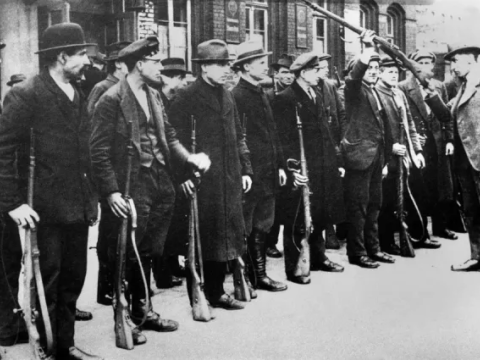
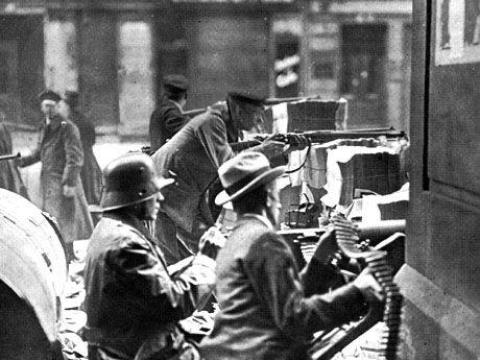
We have now extensively used the time available to us to discuss our tasks with the Russian party authorities, with the Executive of the Third International, with individual Russian party comrades, both leading and ordinary members of the party, and finally with the representatives of the fraternal parties abroad, some of whom were in the Bureau of the Third International as representatives of their party, some of whom had sent representatives to Moscow for information, and some of whom even adopted a negative attitude toward the Third International. As for our first task, the report on the political situation, we can look back on a complete success. The Executive received a report by the Spartacus League on the March events, which was later published in the "Communist International." We did not need to make detailed counter-explanations about the individual distortions of the facts and erroneous condemnations of the political situation during the Kapp Putsch. The Russian comrades themselves felt that this fabrication had arisen from the embarrassment of concealing the inability of centralization. They themselves pointed out to us the contradictory, helpless excuses that only with difficulty try to conceal themselves behind the polemics against the "opposition." We can report that this report provoked general head-shaking in Russia, but also, to some extent, general hilarity. Since the report was to be published in the "Communist International" on the official commission of the Spartacus League, we were asked to write a new report for the "Communist International." However, other, more important tasks arose, so that we were unable to fulfill this commission. We also believe that we can make much better use of the offer to publish a report from Germany in the "Communist International" in a new situation. Moreover, it seemed embarrassing to us to have to bear witness to the German communists, even if they are divided, before the entire International, by holding different opinions on the most important issue of the moment: the moment of the revolution's journey. This decision was also particularly influenced by the fact that the Russian comrades fully shared our position on the revolutionary journey in Germany. They declared, in particular, Karl Radek, who is to be regarded as the Spartacus League's base in Moscow, that new instructions and guidelines would be sent to the Spartacus League for assessing the revolutionary situation in Germany. In this context, we also discussed the question of uniting the entire revolutionary working class for the conquest of political power in Germany. It was stated that. And, looking at Germany from the outside, one can only agree without reservation with this view that the precondition for victory and the preservation of the political power won is the unification of the revolutionary working class. From Moscow's perspective, and with our full confirmation, the situation for unification of the working class fighting for the dictatorship of the proletariat is not seen as challenging as it appears from within. The development of economic and political conditions will sooner or later force the working class together by creating certain fundamental battle cries that can form the basis for joint action if the working class gains the self-confidence to prevent, or at least relegate to secondary importance, the personal animosities of the leaders among themselves and the subtleties in the violent differentiation of revolutionary tactics. Such guidelines already exist in Germany: the arming of the working class and the disarming of reaction, the struggle of the working class for control of production. No matter how significant the tactical differences in the party programs may be in detail, a united front of the overwhelming majority of German workers is already fundamentally in place. We gladly declared our willingness to advocate within our party for helping to promote a joint action for the final struggle on this basis, and we further expressed the hope that our party would certainly take the initiative in creating such a joint action. In principle, a united front of the overwhelming majority of German workers already exists for this. We gladly declared our willingness to advocate within our party for helping to promote a joint action for the final struggle on this basis, and we further expressed the hope that our party would certainly take the initiative in creating such a joint action.In principle, a united front of the overwhelming majority of German workers already exists for this. We gladly declared our willingness to advocate within our party for helping to promote a joint action for the final struggle on this basis, and we further expressed the hope that our party would certainly take the initiative in creating such a joint action.
Regarding the treatment of the second point, "Reporting on the founding of the party and on the party's position with regard to the decision to place itself unconditionally on the ground of the Third International," the official negotiations were influenced by the difficulties and deficiencies mentioned at the beginning. As stated, we lacked sufficiently detailed written information on the party program and the development of the split, so it was easy to interpret and treat our statements as the individual opinions of individuals. We were accused of omissions by all sorts of irresponsible individuals, some of them from a distant past; and our declaration that the party as such could not be held responsible for the events of the "opposition" in earlier months, and that the KAPD in particular, which arose out of the necessity to regain its ability to act, must first achieve and consolidate its rigid organizational form in practical daily struggle, was not given the value we believed it deserved. The executive explained to us that there was no reason to distrust the KAPD as a whole. However, at the present moment, they could not place the trust in our organization that would have been self-evident, based on the May address of the Hamburg organization, signed by Comrades Laufenberg and Wolffheim, who also claimed the official endorsement of the entire party. The May address was read to us at the beginning of the discussion on our motion and remained the framework within which all subsequent negotiations proceeded. The statements contained in this address about the stabbing of the front, the civil war, and the national uprising seemed so outrageous to us that we declared from the outset that this manifesto could only be a blatant forgery. We finally bowed to the facts and had to acknowledge the authenticity of this manifesto and declared that we would have refused to represent a party in Moscow that tolerated such views within its ranks. While this may have been a deliberate provocation by the Hamburg-based Laufenberg and Wolffheim, intended to make the party subservient to their particular views and to present the delegation with a ready-made fact, we do not wish to fall into the old party error of allowing this matter to escalate into personal differences. We declared that we would advocate for the removal of such tendencies from our party. Our comrades will understand that, nevertheless, such a declaration is detrimental to the direction of the negotiations, provided they are chaired by a comrade like Karl Radek, who has an openly admitted interest in defending the Spartacus League's policies against us, is little influenced by it anymore. From the outset, we were forced into a hopeless defensive position, which was hopeless insofar as we naturally had no way of presenting an official statement from the entire party against these tendencies at the moment, so that our opinions had to be regarded only as private. The executive branch openly made it clear to us that, as a result, it harbored justified mistrust of the unity of our organization and had to make its decisions accordingly.
In this context, a resolution by Comrade Rühle, adopted by the East Saxony Economic District, was presented to us. It was directed against the unity of the party and gave new fertile ground to the executive's distrust of us as a unified organization. We fully recognized the executive's position that, at the current critical moment of the social revolution, when all forces must be united in the final phase before the decisive battle, a tight political party as a fighting group organization was absolutely necessary, and that the tendencies toward the dissolution of the party at this moment, in the midst of preparations for the final battle, would inevitably have a paralyzing effect. We declared that even the members of our economic districts, who have declared themselves in favor of organizational autonomy and the transformation of the party concept into a communal concept of a more federalist federation, do not wish to be understood as rejecting the disciplined leadership of the struggle and deny in any case the necessity of a central political party, as recognized in the program of the KAP. The declaration of this revolution, however, that they would only remain in the party in order to dissolve it, spoke, perhaps misleadingly, too clearly of the opposite. We are convinced that only through ruthless openness regarding the goals and organization of a party can the German communists' mistrust of parties in general, which is largely attributable to the tactics of the Spartacus League, be overcome and must be overcome if these German communists wish to function as genuine fellow combatants in the decisive phase of the social revolution. Each individual will be faced with the necessity of greater self-discipline in order to perceive the necessary discipline of fighting not as imposed by authority from above, but as the common basis of all combatants in a disciplinary organization from the bottom up. We declared that we consider these party-destroying tendencies to be contrary to the program of our party and that we would advocate for purging the party of such tendencies. In this case, too, it will not be a matter of bringing personal differences and insults into the expected conflicts.
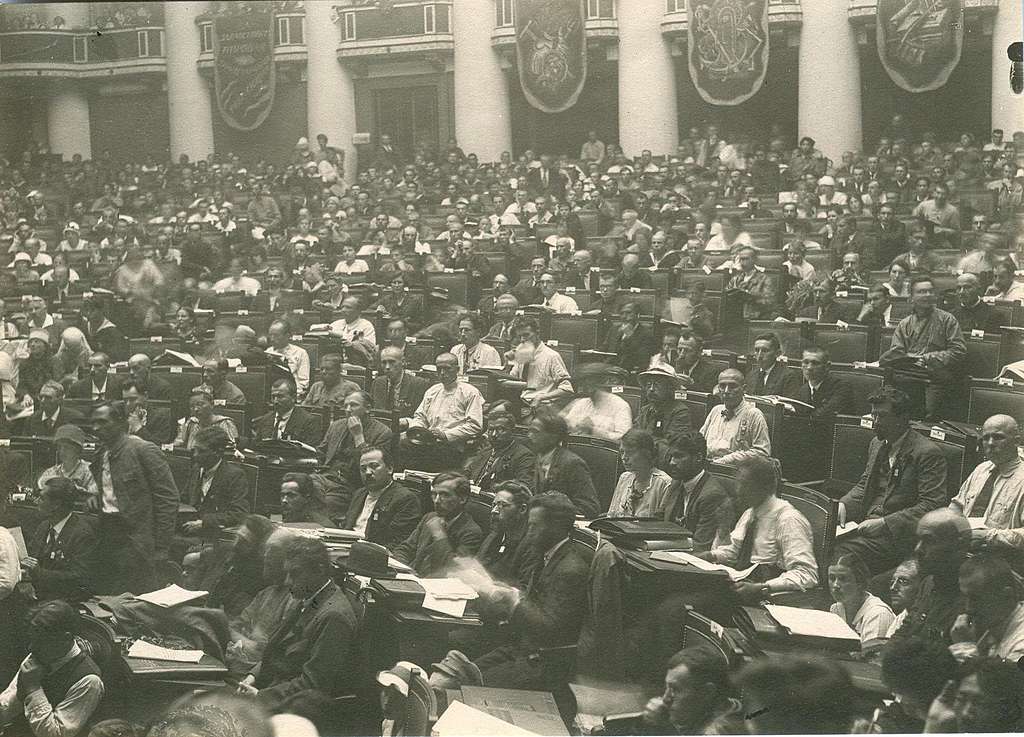
It is only understandable that after these disputes, which although the negotiations took up the entire first day of negotiations, our negotiations on tactical questions such as our position on parliamentarism and the trade union question had lost much of the intensity with which they should have been handled. This question was addressed on a second day of negotiations, and the position of the executive, which is set out in detail in the open letter to the members of the KAPD, was announced. They essentially culminated in the assertion that the tactics of the KAPD were pushing towards sectarianism, insofar as there was a danger that it would distance itself from the masses. We represented the KAPD's position in detail and pointed out in particular that our tactics were precisely aimed at approaching the masses through agitation with new methods, contrary to the previous empty criticism, and that it was, for example, a task of the "General Workers' Union" to wage the struggle against the trade unions by demonstrating the new organizational form in practice to the masses of members. As an organization, they thus represent a new means of struggle compared to those previously employed. We were pleased to note that, despite the secretaries' negative stance, there is considerable interest in the development and goals of the "General Workers' Union," and here, too, the lack of fundamental, in-depth presentations on the development and goals of the "General Workers' Union" became apparent. We were presented with a pamphlet by Lenin entitled "Childhood Diseases of Left Communists," which essentially advocates flexibility and elasticity of tactics in the revolutionary struggle. We agreed in principle with the guiding principles contained therein, and we also admitted that a certain rigidity in our tactics, in the defensive struggle we must wage against opposing opinions, has set in. However, insofar as the pamphlet deals with a critique of the German situation, which, as Lenin himself admitted to us, is based on a one-sided presentation of the development of the German working class toward social revolution, we have not failed to point out the errors contained therein. Regarding the question of parliamentarism, a thorough analysis of the political situation is also lacking in Russia, which would vindicate our view that parliamentary elections, with particular consideration of the ideology of the German working class, and especially here again of the indifferents outside the political struggle, must have a paralyzing effect on the development of the social revolution. In summary, it can be said that the formulation of the basic tactical approach of the Third International will only be decided at the current congress. Despite the undoubted preponderance of the Russian comrades at this Congress, it seems by no means certain that the Congress will accept the Executive's theses unchanged, at least hardly with a compelling character for the current German situation and the tactical goals of our party. It will be our task not only to present our position on the trade union question in detail, beyond empty criticism, but also, in contact with the sister organizations in America, Holland, Norway, and Switzerland, which essentially share our position, and in conjunction with the Russian trade unions, which are entirely based on the principle of the "General Workers' Union," to submit appropriate motions and guidelines to the Congress. These, without undermining the unified militant character of the Third International, which we also welcome, leave room for our tactics on the trade union question and in dealing with parliamentarism. In this spirit, we have declared that we will advocate to our party that we will submit to the resolutions of the Congress of the Third International.
In the reply, which was only handed to us shortly before our departure, so that we had no opportunity to comment on it, the creation of a joint organizing committee with the Spartacus League is proposed as a further point. The open letter contains demonstrable errors on the issue of the split, which we could have easily clarified through prior contact, which we have always urged. In various personal discussions with Russian comrades such as Lenin, Zinoviev, and Bukharin, as well as in official negotiations with members of the Executive, we have repeatedly and objectively and thoroughly discussed what separates us from the Spartacus League and why the split, provoked by the Spartacus League, has ultimately become an absolute necessity for us as well. We declared that the questions of tactics, on which the parties differ, are of almost secondary importance because they are ultimately merely an expression of the fundamental principle of the Spartacus League: the absolute authoritative power principle of a leadership over the working class. The tactical differences developed due to the wavering attitude and incompetence of the then and still remaining leaders of the Spartacus League regarding all issues of social revolution after the months of initial setbacks at the beginning of 1919. We can report that the Russian comrades generally agree with our view on this. They are of the opinion that in Germany the Communist Party must be supported by the moral superiority of the Russian Party and the executive, and that it must be possible to gradually educate even incompetent leaders to become more capable instruments of the world revolution. They believe that there is no time to educate and test new leaders who would have an "authoritative" character among the working class. In response to inquiries from his Russian party comrades regarding the leaders of the Spartacus League, Karl Radek explained that in the relatively short period of the revolution's more intensive development, they had not found sufficient opportunity to secure their authority among the working class, and that for this reason the executive must assist in this. Also interesting is Karl Radek's explicit statement that he himself, after initially having advocated a split, had addressed a letter to Dr. Paul Levi at the moment of the Heidelberg Conference, which was written on the basis of newly acquired knowledge about the development of the German working class during the phase of the Social Revolution, in which he urgently advised against a split, since the time for a split in the German Communist Party had not yet arrived. He would have warned against hasty. He warned of a split as long as the alleged syndicalist tendencies that were prevalent at the time had not yet matured sufficiently among the workers to justify a split. However, since Dr. Levi had not received this letter in time, nothing could be changed, and they now had to accept this tactical error. And precisely for this reason, the Spartacus League needed the moral support of the executive all the more.
We welcomed this open discussion, but pointed out that authority, which is supposed to be the bearer of disciplinary power in the struggle, could only be understood and approved by us if authority was synonymous with trust. We further pointed out that the leadership of the Spartacus League lacks this trust among the overwhelming majority of the working class, which entered the social revolution in Germany in 1919 as the vanguard, or at least that it had forfeited this trust through its methods of waging war within the parties and through clashes of opinions. The development of the disputes with the Spartacus League shows that these are not occasional outbursts of overexcited individuals, but that there is an underlying system. The German working class is facing a new crisis. It wants to engage in revolutionary struggle and has as little to do with systematic questions of psychology and their repercussions as possible. It is now forced to decide whether it wants to belong to an authoritarian organization from top to bottom or whether it wants to first undergo the thorny path of developing self-confidence in order to become ripe for the vanguard of the social revolution. Conditions in Germany have, perhaps fortunately, meant that some of these questions are already being decided in the very genesis of the revolution. And it is not so much a purely German matter; rather, it is a problem for the entire Western European working class that is being addressed here. We do not want to close our eyes to the difficulty of finding a quick solution. However, it can be considered certain that anyone who has recognized the difference in the fundamental attitudes of the two communist parties will consider it impossible to advocate a possible and future merger of the two communist parties at this time. It means breaking the revolutionary will and the backbone of the self-confidence development of our members, who have been attacked with the most ugly means, to try to suggest to them the idea of forming a unified organization with the Spartacus League, which would form a large communist family to form now. We are aware that our side, too, has resorted to ugly means in the defensive struggle. We are further convinced that the disputes with the Spartacus League, which are fundamentally of international significance, must be brought into objective waters. We are further convinced that, if there is a good will to achieve the ultimate goal of the current revolution—the conquest of political power by the working class—it can be easy to define precisely how far a connection within the Action with the Spartacus League is possible and how far it must be possible. We therefore believe we can recommend accepting the proposal to create an organizing committee. The Russian comrades have explained to us that a new personality, who has not been compromised or burdened by the party struggle, will be delegated to the headship and chairmanship of this Action Committee as a representative of the executive.
Finally, we call on the party to send delegates to the new congress. Based on our own experience, we request that these delegates be provided with detailed material and precise instructions for the membership. The congress will achieve international significance, insofar as there is a general desire to allow the International to become effective at this meeting. It is well known that the founding of the Third International was a tactical necessity that, to a certain extent, had to anticipate the decision of the international proletariat itself. Undoubtedly, the revolutionary, class-conscious proletariat will choose the Third International; and the resolutions adopted there will be designed to set a new pace for the development of the world revolution through a tight consolidation. The KAPD will certainly not want to stand in the way of this. We may say, from our knowledge of the situation in our party, that no so-called leader of our party has the ambition to place his person in the foreground, as is suggested in the above-mentioned open letter, nor would he consider for a minute resigning if his person were to stand in the way of the development of the unity of the revolutionary working class for the final struggle.
We also report that the Russian comrades have most willingly made the columns of their daily newspapers available to us to explain our intentions regarding the political and economic situation in Germany, as well as our methods of struggle. We have published essays in trade union journals and in an economics magazine, as well as several articles in the daily newspapers. Furthermore, we have not missed any opportunity to establish personal contact with the Russian comrades and have spoken as speakers at a factory meeting of the Prokhorov Factory , one of the largest Russian textile manufacturers, which employs over 8,000 workers, as well as at a public meeting in the Bresnaya Rayon, attended by many thousands. At both meetings, resolutions were adopted expressing the greetings of the Russian communists and the Russian proletariat to the German proletariat and to the KAPD (German Communist Party), and expressing the hope that the German working class will succeed in breaking the power of capital and the trade union bureaucracy in a united front. During the discussions at both meetings, it was expressed that the Russian proletariat expects its German comrades to be able, through their victory, to help rebuild Soviet Russia. The resolutions further expressed that the Russian proletariat is prepared to accept new sacrifices and burdens, to accelerate the development of the German revolution through active support, and, in the event of victory, to help defend the newly acquired power. We have also directed our efforts toward establishing and strengthening ties with fraternal organizations abroad. We have established such ties with the two Communist Parties in America, as well as with the IIW, the British Socialist Party, the Norwegian Workers' Party, the Young Socialists in Sweden and Denmark, the Swiss Communist Party, the Latvian and Czechoslovak Communist Parties, and the newly formed Communist Party of Finland. There is a prospect that we will soon be able to expand our network of contacts through intermediaries, including the proletarian parties of the other countries whose representatives we have not been able to reach.
We have openly expressed our opinions to you, comrades, without regard for tactical considerations. We leave the decision to you; we recommend that you adopt the points mentioned so that at the upcoming party congress, the program of the Communist Workers' Party of Germany can develop clearly and freely from the organization's teething problems to full operational capacity. Our party's view of the political and economic situation in Germany has proven to be correct. The time for social revolution has come in Germany. Now only one goal counts: to join the ranks of the proletarian fighters, to weld together all considerations for personal grievances, all deviations, and theoretical considerations, in order to help the revolution in Germany achieve victory!
Long live the proletarian revolution in Germany!
Long live the world revolution!





Comments