
An article by Internationalists in Wales about the 2026 Senedd elections in Wales.

In May 2026 the British state will invite people to take part in various elections. In Wales the Senedd elections are being hailed as the most important since the devolved parliament was founded in 1999. However, no matter which myth peddlers sit in the big building in Cardiff, ordinary people will still be confronted with unaffordable food, heating and housing; stagnant wages and job cuts; more pressure on people who do or should receive benefits; crumbling schools, infrastructure and hospitals; a slide towards militarisation and war; and prevailing ideas that try and shift the blame from the rotten profit-based system onto marginalised communities.
The alternative will not be found in the polling booth. Politicians will continue to front up a system that offers no hope for workers in Wales or anywhere else. Instead those of us who “work for a living” (as opposed to those who profit from our exploitation) can start to build our own resistance to the crap piled on us by the bosses and their politicians by organising in our communities and workplaces. This short text may or may not persuade you to abstain this May. Regardless, those few minutes every four years will not give us any hope for the future and are a pale imitation of democracy. Instead, working people need to rediscover our ability to fight for ourselves, organised by ourselves and in our own interests.
World crises hit working people in Wales
During the last 50 years the world-wide capitalist system has stumbled from one economic and political crisis to another. Of course, Wales and the rest of Great Britain have been hit by that. In the 1980s de-industrialisation ripped apart traditional working class communities in many parts of Wales. We have been reshaped with whole estates being reduced to “areas of deprivation” with widespread social problems and generation after generation not being able to find well paid secure work. The result of the attacks against the working class over those decades is now clear to us all.
In June 2025, the Joseph Rowntree Trust published a report on Poverty in Wales. It commented that:
“Twenty years ago, JRF’s first report on poverty in Wales found a sustained and welcome decrease in poverty since the mid-1990s. Its latest analysis brings no such good news, with headline rates of poverty flatlining in the 2 decades since. That is bad enough, but most worrying of all is the rise in very deep poverty. Today, almost half of all people in poverty in Wales have incomes so low that they are in this extreme situation: this means more people forced to use food banks, unable to heat their homes or living in temporary accommodation. The human cost of poverty, especially deep poverty, and its impact on public services are huge”.
The use of foodbanks has rocketed. In December 2025, ITV reported that:
“The number of parcels given out in food banks across Wales has risen by more than 20% since before the pandemic, according to research from The Trussell Trust. The anti-poverty charity found there was a sharp rise last winter compared to five years ago. In that period, parcels for pensioners have more than doubled.”
These problems are not unique to Wales but the result of a global economic system which continuously seeks to maximise profit - a system which is also driving climate change.
The Senedd Smokescreen: Hoping for nice MS’s or building resistance?
The Senedd (or Welsh Parliament) is an elected body which legislates around devolved issues such as health, education, transport, agriculture and local government.The political parties, the media and the whole establishment sell the story that by turning up and voting the citizens have control. Nothing could be further from the truth.
In Wales, and elsewhere in Great Britain, the decision makers have created a maze of elected bodies that sit alongside the unelected organisations such as Natural Resources Wales, Transport for Wales, Dŵr Cymru and, of course, the Police and the Courts. At regular intervals the political parties compete for places on the elected gravy trains such as Community Councils, Borough Councils, Police and Crime Commissioners, and, this time around, the Senedd. These different tiers mesh together as the elected part of the state. The frontrunners of this Senedd election are Reform and Plaid Cymru, promoting Welsh and British nationalism respectively.
Decades of declining living conditions has led to feelings of hopelessness. This has opened the door for people to start believing the lies and imaginary quick fixes of politicians and influencers. They blame other political parties, supposed inefficiencies and ordinary people due to factors such as their ethnicity, gender, language or age.
The rise of racism and anti-migrant sentiment in Wales is deeply troubling. We have seen the emergence of disgusting and divisive protests against housing Asylum Seekers in hotels such as Stradey Park in Llanelli. There have also been successful mobilisations against the far-right such as in Llantwit Major- where the local community vastly outnumbered far-right activists. For the working class to successfully fight for its interests it needs to resist the divide and rule tactics of the rich. This means standing up for marginalised communities (not just migrants but also women, the trans community, disabled people etc.) while emphasising the fact that our society is fundamentally unequal and therefore we need to unite to fight austerity, price rises and stagnant wages.
Despite our opposition to racism, we will not join in a chorus with the “keep out Reform” campaigners. Fixated on Reform they call on their followers to actively support Labour, Green and Plaid Cymru. Those parties, if elected, will continue to implement any measures necessary to keep capitalism on life support at our expense. As costs continue to rise faster than wages, Farage’s followers and the fascist sects of their right will have been vindicated. The establishment left has no means or desire to effectively defend the interests of the working class.
Confused street fighters and their far-right puppet-masters are also not the only agents of racism and division. For centuries the capitalist establishment has adopted discriminatory laws and practices. The Tories’ "hostile environment" was drawn from the same poisoned well as Starmer’s efforts to snatch away “permanent right of abode”.
While it is less common and pernicious, in parts of Wales anti-English sentiment can also have a divisive effect. It is all too easy to blame all of our problems on English migrants, tourists and second-home owners but the reality is that many of these people are or were workers seeking to escape gentrification and poor living conditions in England. Billionaires can afford far more than a room in an HMO or a static caravan on the Welsh coast.
Of course, the real festering problems that we suffer are not illusions. Issues such as excessive tourism, gentrification, housing shortages, homelessness, attacks on the Welsh language, strain on local services and job losses cannot be ignored. They have to be dealt with in a nuanced approach which emphasises the class struggle instead of blaming "others" and "outsiders". The anger behind the successful blockade outside Stradey Park to stop it being used to house asylum seekers has done nothing to reduce poverty in Llanelli, only fuelling racist paranoia. Instead of targeting migrants, direct action needs to be used against the super-rich. For example, empty accommodation, such as the old Pontins holiday park in Prestatyn, could either be directly seized by local campaigners or re-opened by the Council to house the homeless regardless of ethnicity.
Our enemies are not working people who were born in a different territory, but the capitalists across the world.
We should oppose nationalism by stressing the exploitation of the working class. In 1912, Anton Pannekoek, a lifelong advocate for the revolutionary overthrow of capitalism, wrote:
“If they speak of their demands for national schools, we shall call attention to the insufficiency of the teaching dispensed to the children of the workers, who learn no more than what is necessary for their subsequent life of back-breaking toil at the service of capital. If they speak of street signs and administrative posts, we will speak of the misery which compels the proletarians to emigrate. If they speak of the unity of the nation, we will speak of exploitation and class oppression. If they speak of the greatness of the nation, we will speak of the solidarity of the proletariat of the whole world. … The class struggle and propaganda for socialism comprise the sole effective means of breaking the power of nationalism.”
Fighting for ourselves

In the last year, working class people in Wales have given us glimmers of hope by starting to stand up for themselves.
In 2024 healthcare support workers in Swansea, Neath and Port Talbot threatened to strike due to being underpaid. The NHS agreed to re-band them and provide compensation. On 30 September 2025 the health board “paused” the deal. Workers responded with renewed talk of strike action as well as a protest at Morriston Hospital. This was followed by a march on the health board in Port Talbot to deliver a petition with over 2,000 signatures. Their vigilance managed to secure the pay-rise and backpay for healthcare support workers across Wales.

From Bangor to Cardiff, university workers and students have been opposing redundancies through protests, public scrutiny and threats of strike action. After a high profile campaign, Cardiff University agreed to implement no compulsory redundancies in 2026.
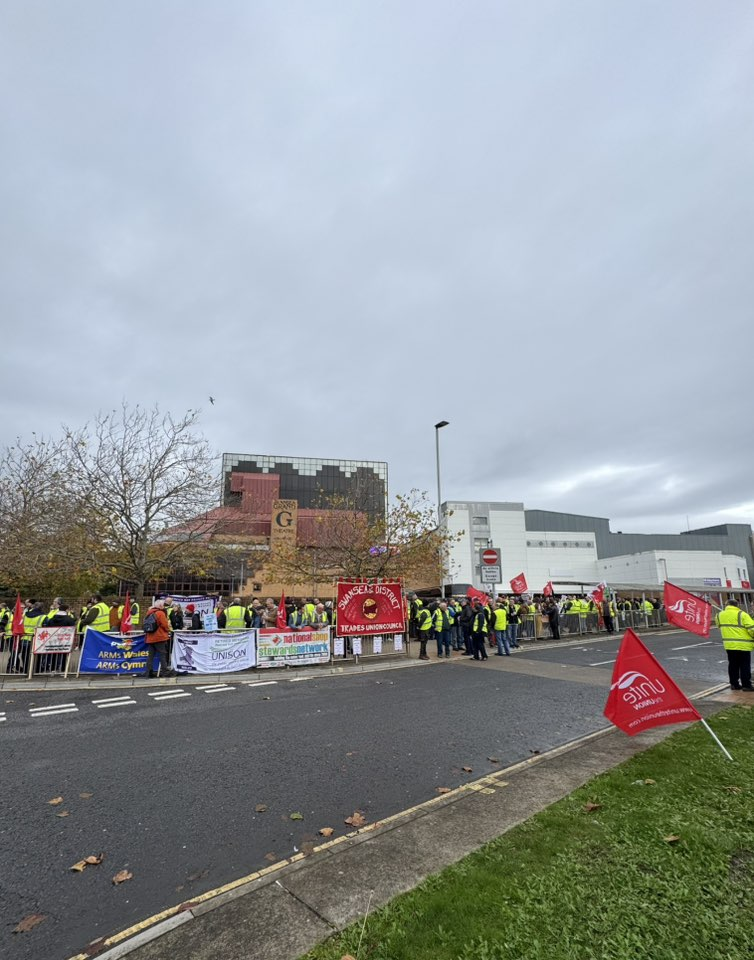
Bus drivers won a pay rise and a backdated pay award from First Cymru in December 2025. The dispute covered South West Wales, including depots at Ammanford, Bridgend, Port Talbot and Swansea. At Swansea just six buses out of the standard 67 left the depot. They used a novel tactic of continuously using a zebra crossing to disrupt scab buses. These sorts of creative actions and attempts to enforce picket lines have become increasingly rare. Nonetheless it was the solid turnout that was the backbone of their strength. Over 90% voted in favour of industrial action. Eight days of strikes in October and November were followed by a vote to strike for two months, over Christmas, leading to their victory. It has also become unusual to hear workers criticising unions for a lack of militancy in the media, but ahead of the strike one driver told voice.cymru:
“Unfortunately some union officers are too friendly with management and when told by the bosses that there is no money to pay bus drivers properly, they believe it.”
Discontent with First Cymru, and to a lesser extent Unite the Union, has continued following the end of the dispute. Certain workers were temporarily suspended for their actions during the strike and the pay increases are not being applied to overtime contrary to the initial agreement.

Perhaps the most militant dispute was at the Oscar Mayer ready meal factory in Wrexham. Strikes began in September 2024 after Oscar Mayer planned to use fire-and-rehire tactics to cut pay by up to £3,000. Most workers spoke English as a second language and some were dismissed due to not understanding the deadlines to accept the changes. Between 2024 and April 2025 nearly 600 workers struck for over 200 days. They also ran an active campaign against Oscar Mayer and its owner Pemberton Asset Management. Protests were organised outside Pemberton and the HQ of the Co-op in Manchester, the Local Authority Pensions Fund Forum in Bournemouth, East Riding of Yorkshire Council and the Global Alts investment conference in Miami. The campaign succeeded in getting Clwyd Pension Fund to agree to halt further investment in Pemberton. In Wrexham huge noisy protests were organised outside supermarkets supplied by Oscar Mayer such as Aldi, Asda, Tesco and Sainsburys. The workers were successful at resisting the changes, reinstating dismissed workers, winning compensation, improving holiday arrangements and union recognition. It is worth noting that this was one of the most successful recent strikes in Wales and involved a huge proportion of migrant workers.
There were also strikes at the Princes food factory in Cardiff and OFGEM, Telecare workers at Cardiff Council protested over safety and teachers at a school in Abergele took strike action against excessive workloads and bullying from management. Health Visitors at Bridgend, Merthyr Tydfil, and Rhondda Cynon Taf are currently striking against underpayment.
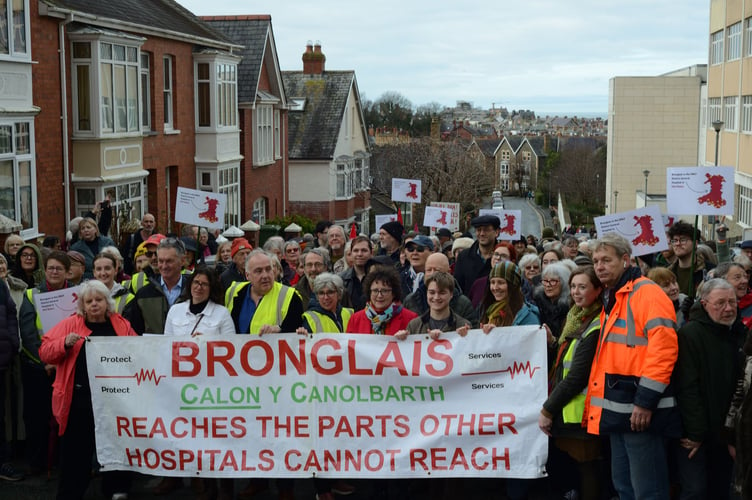
The class struggle is by no means limited to the workplace. Disabled people across Wales organised protests against Personal Independence Payment cuts. There have been several campaigns against local councils implementing cuts - in Caerphilly the campaign was partly successful and involved the temporary occupation of an affected library. Cardiff Acorn have been resisting evictions and winning back deposits from landlords using direct action. In Aberystwyth around 800 people protested against the planned closure of the stroke unit at Bronglais Hospital.
Despite the disputes noted above the class struggle is at a low ebb - most attacks on the working class are not resisted at all. Before we can meaningful talk of working class power again we will need to see revival of methods long forgotten:
- the return of mass and effective picketing
- workers using direct action rather than relying on legal cases
- strikes which are able and willing to defy the law
- strikes which spread beyond single workplaces or employers
- strikes over “political” issues such as against war or the government
- workers organising themselves to go beyond the stranglehold of the trade union leadership and machinery which has a tendency to undermine militancy
- mass meetings open to all workers, whether in a Union or not, and elected strike committees of recallable delegates to organise struggles
Unlike the Left who want to help run capitalism - Labour, Plaid, Greens and “Your Party” - we do not believe that socialism has anything to do with the maintaining or strengthening the state machine or nationalising the economy. For us, socialism or communism is a world-wide moneyless, stateless and classless society, administered by democratically elected workers’ councils with production and distribution organised to satisfy need rather than to generate profit.
It is just as true in the public as in the private sector that “the working class and the employing class have nothing in common" since capitalists and states depend on the exploitation of the workers. Many of the above disputes are being waged directly against the state. Control over Westminster, the Senedd or a local council only enables the partial management of capitalism and inevitably places the governing party at odds with the working class. Therefore governing parties need to disguise and maintain the bosses control. When we begin to organise effectively these parties, by law or by force, will sell-out or break our strikes.They act that way regardless of how left-wing or socialist they profess to be. In fact, their exercise of parliamentary power is only allowed by the capitalist class so long as it is clear that the Government will uphold their power, privilege and wealth. While capitalists continue to control how, where and when we work - then elections are an exercise in smoke and mirrors. For this reason we will not endorse or campaign for any parties.
Instead of the parliamentary charades we look towards the working class freeing ourselves through our own struggles - organised by ourselves and fighting in our own interests. As these actions spread, overlap and unite we will have to break through the divisions and constraints of trade unionism and capitalist legality, and every form of state control whether democratic or otherwise. It is during those struggles that workers will generate their own decision-making assemblies (or Workers’ Councils) from the bottom-up. These new forms of working class democracy will be the basis for a world free of exploitation and oppression. The seeds of socialism will not take root in the Senedd but in the midst of the class struggle.
You can contact us at: [email protected]
Attachments
Socialism or the Senedd.pdf
(11.26 MB)


Comments
The document contains two…
The document contains two short paragraphs to summarise the argument for anti-capitalists to resist the pressure to join the “anti-Reform” bandwagon in the run-up to the Senedd elections - or those in England or Scotland.
==================================================================
Despite our opposition to racism, we will not join in a chorus with the “keep out Reform” campaigners. Fixated on Reform they call on their followers to actively support Labour, Green and Plaid Cymru. Those parties, if elected, will continue to implement any measures necessary to keep capitalism on left support at our expense. As costs continue to rise faster than wages, Farage’s followers and the fascist sects of their right will have been vindicated. The establishment left has no means or desire to effectively defend the interests of the working class.
Confused street fighters and their far-right puppet-masters are also not the only agents of racism and division. For centuries the capitalist establishment has adopted discriminatory laws and practices. The Tories’ "hostile environment" was drawn from the same poisoned well as Starmer’s efforts to snatch away “permanent right of abode”.
=================================================================
It is clear that many comrades, even including some Anarchists/libertarian socialists, are not convinced. As the electoral pantomime draws closer, discussions with comrades have shown the depth and breadth of the temptation to ditch a clear rejection of parliamentary electoral politics. Instead, friends and militant allies have adopted variants of “play the electoral game just this time”.
So … here's a few last minute points.
It won't be “just this time”. Yes, these elections are taking place while right populism is resurgent across the world, but the leftist siren voices always have a good reason to dragoon us into the electoral hall of mirrors. “Kick the Tories out”, “Corbynism is different”, “Privatisation will erode state ownership” etc. all come and go. Nobody should bet against the need to diminish Reform still being their “order of the day” in 2028 or 2029.
The other side of the “Keep Reform Out” coin is unavoidably “Vote for someone else”. For anti-capitalists the article is right in saying “The establishment left has no means or desire to effectively defend the interests of the working class”.
Two questions then - Do you really believe that a Senedd, Scottish Parliament or English Council dominated by any party or parties will defend working people from the crap that capitalism dumps on us? If so, the peddlers of delusions have won another convert.
If not, what defence will you have against the Farageists, Loweites or open fascists in a few months when they say “You wanted people to vote for this crap, we told them not to”.
You are arguing that the “flag shaggers” party are uniquely depraved in their nationalism. The problem is that, whether you like it or not, your arguments to vote to keep Reform out will very often be interpreted as voting for SNP or Plaid Cymru. Whether their followers actually shag the Saltire or Draig Goch, they are certainly enamoured of all the nationalist illusions surrounding national flags and projects.
Will not voting Reform reduce racist attacks? As the article points out the real day to day racism comes from the state using all the legal tricks they control. This has happened for many many years irrespective of what party governs. But what about the street thugs that carry out violent acts? Do we want to rely on the state or the police who have covered up attacks and let us down time after time? Again, we need to look towards working class communities to keep the thugs away and unite irrespective of ethnicity or culture. Nobody pretends that self-organisation is easy or automatic but abandoning the approach leaves us disarmed against all our class enemies - not just one political fragment.
What is an anti-capitalist antidote to right populism? No way is it “Together Alliance” Popular Frontism where the lefts and liberals and their pet celebrities boost each other to extol “Hope” that capitalism can run more kindly. Sorry, but even if this rotten system temporarily puts on a smiley mask, it only gives cover to the accelerating drive to world wide impoverishment, militarisation and ecological disaster.
But there is a real alternative vision. At the end of the Second World War it was summarised by Daniel Guérin.
Anti-fascism cannot triumph as long as it drags along as the tail to the kite of bourgeois democracy. Beware of “anti” formulas. They are always inadequate because they are purely negative. One cannot conquer a principle except by opposing to it another principle – a superior principle. The world of today, in the midst of its convulsions, is not only looking for a form of property that corresponds to the collective character and the gigantic scale of modern production; it seeks also a form of government capable of substituting a rational order for chaos, while liberating man. Bourgeois parliamentarianism offers only a caricature of democracy, ever more impotent and more corrupt. Deceived and disheartened, the world turns towards the strong State, the heaven-sent man, towards the “leader principle.”
The totalitarian state is a tottering monster. We shall be forever rid of it by assuring the triumph of the antithesis: the Republic of the Workers’ Councils.
Guérin’s answer remains the real alternative today as it did in 1945. It may appear to be a very long way off with many obstacles. But we have to be clear that adopting electoral stratagems is neither a shortcut nor a valid alternative. At best it creates a confused diversion away from working-class liberatory self-organisation.