

Based on the author’s foundational theories of relational materialism and the Theory of Economic Practice, this book adopts historical materialism to trace thousands of years of educational evolution across Eastern and Western civilizations. It puts forward a core argument: education in primitive society was an economic practice integrated with labour, geared toward transforming the world. After the emergence of class divisions, education became completely severed from real production, evolving into a cage of simulation operated by symbols, examinations and standardized discipline — the root of all educational alienation.
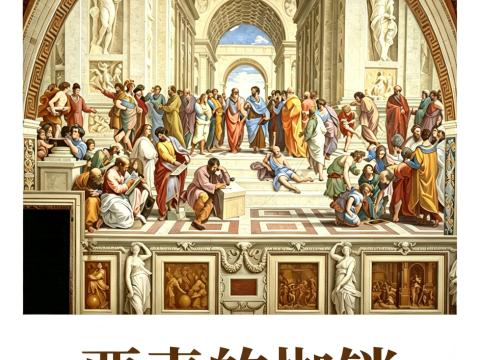
The book dissects representative educational systems including Sumerian scribal schools, ancient Indian Gurukulas, official schools of Western Zhou China, the imperial civil service examination system, classical Western education and the Prussian schooling system, as well as modern capitalist campuses. It exposes three ruling functions of simulated education: draining the energy of the masses, creating divisions among labourers, and absorbing agents for the ruling system. Through practice-detached assessments, such systems tame compliant individuals and perpetuate the old social order. It further analyses the logic of labour-power commodification under capitalism, revealing how credential stratification, unequal school funding, student debt and academic hierarchies solidify class divides, reducing whole human beings into fragmented labour tools priced by capital.
The work also offers a dialectical examination of education under socialism. While public ownership has brought institutional transformation, remnants of old educational structures persist. Exam-oriented screening and discipline-centred curricula decouple academic credentials from practical labour competence, distorting the principle of distribution according to work. It objectively reviews pioneering labour education experiments such as education in the Soviet base areas, the Counter-Japanese University and the Down to the Countryside Movement, acknowledging their breakthroughs while acknowledging their historical limitations. It also differentiates the strengths and fundamental flaws of educational thinkers including Rousseau, Dewey and Althusser, returning to Marx and Engels’ core tenet of integrating education with productive labour.
Rejecting superficial reforms within exam-driven frameworks, the book concludes with a roadmap for educational revolution. It advocates a fully practice-oriented model centred on the cycle of practice-cognition-re-practice. It outlines multi-faceted supporting mechanisms covering teacher renewal, practical resource allocation, institutional tolerance and the reshaping of social mindsets, alongside a phased transition blueprint. Its long-term vision lies in dismantling credential-based selection, restoring education to its essence as a practice of transforming the world, freeing humanity from symbolic discipline and achieving the full emancipation of working subjects.




Comments