
This is the latest statement issued nearly one week ago by the Internationalist Workers' Organization regarding the recent massacre in Iran. The original text in Farsi can be found here.
Please note that this is not an official translation. Given the events in Iran and the need for a clear explanation, I have translated it with assistance from AI.

A Land in the Slaughterhouse: An Elegy for a Massacre and an Indictment of Its Architects
A land sits in mourning. A land is drenched in blood. A land has undergone a catastrophe whose comprehension seems difficult, and at times impossible, even for the millions of grieving people. We speak of the massacre of thousands of protesting, justice-seeking human beings in the streets and city squares. We speak of four black days in which the apparatus of repression, without any veil or restraint, turned street executions into official policy. We speak of blood-soaked bodies said to have been piled in public thoroughfares—to plant terror not only in the hearts of protesters, but in the very soul of a hungry and enraged society; so that the domination of the ruling tyrants might be consolidated through the naked display of death.
The millions of people of Iran have lived through an experience that is not of the nature of “repression” in its usual sense, but of the nature of a slaughterhouse. The figures constantly change: two thousand, three thousand, five thousand, ten thousand, twelve thousand dead… But every number is a life; and behind every life lie dozens of human bonds filled with love and hope for the future. Every figure is a name that will no longer be called; a hand that will no longer work; an eye that will no longer see tomorrow. This massacre has targeted not only lives, but the social existence of the community.
The piling of perforated, bloodied bodies to sow fear is a stain that will be erased neither from collective memory nor from human history. The cries for justice of bereaved mothers, which rose skyward with every wave of protest, have now turned into nightly weeping that has engulfed this entire unfortunate land. Streets that were washed every night during these four days were once again made crimson each morning with the blood of the defiant. Now, this land is like a grieving mother; and the world, with stunned eyes, watches—and at the same time shares in—this mourning.
But this catastrophe is not merely the product of the savagery of a regime. This slaughterhouse is a stage upon which multiple forces have each played their part. Alongside the triggers that were pulled and the orders that were issued, a political project was also at work: a project that steered the social uprising away from the path of emancipation and toward blind riot, the illusion of salvation from outside, and a gamble on the intervention of foreign powers.
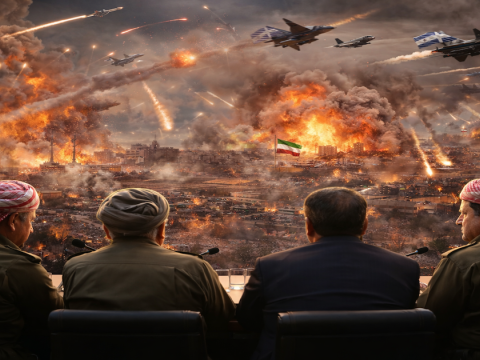
Proxy groups of the United States and Israel—by politically investing in the people's anger, by promising rapid victory, by the illusory marketing of “global support,” and by reducing the uprising to a struggle over replacing the ruling body—played a dangerous role in this catastrophe. They turned the uprising into a field of political speculation; they transformed the blood being shed into a playing card on the table of regional and global powers; and by pushing the protest toward military and interventionist scenarios, they further fanned the flames of this slaughterhouse.
This dirty game has not yet ended. The project of turning a protest uprising into an instrument of bargaining and war continues. The very forces that reassured the people with “victory from the skies” are today still attempting to build fresh political capital from this massacre. The same powers that for decades have been partners in sanctions for negotiation, poverty, and suffocation, have now struck the pose of “supporters of the people.” And the same project that hollowed the uprising from within continues its efforts to convert the spilled blood into a tool of political bargaining.
But the truth is more naked than can be concealed: this massacre is the result of the deadly conjunction of domestic despotism with imperialist and proxy gambling. It is the result of the suspension of independent, popular, and class-based politics. It is the result of that moment when the uprising—disorganized, without a clear horizon, and without independent power—was hurled into the arena of power settlements between powers.
This tragic and sorrowful historical tragedy once again emphasizes the necessity of an organized movement, and the necessity of relying on the immense class power of the working class. A class that, by its inherent character and nature, links the ascent and advance of the movement to the level of preparedness and organization of protests; a class that, at the height of an uprising, paralyzes the economic, transportation, energy, and even military arteries of the rulers, and strips the power-holders of the opportunity to commit such crimes.
Now, in this immense mourning, our duty is not merely to weep. Mourning, if it does not turn into consciousness, will take victims again. It must be said with a loud voice: no blood should become the red carpet for new despots, no massacre should become a launchpad for power brokers, and no uprising should, once again, at the cost of the lives of the downtrodden, be placed in service of reproducing the order of domination.
16 January 2026 – 26 Dey 1404
Internationalist Workers’ Organization


Comments