
Joe Jacobs on working class life in the East End in the early 20th Century, including the garment trade, union work and his early membership of the Communist Party of Great Britain.

The man who offered me a job was a tailor’s presser as was my uncle and two of his sons. This was a job for a strong boy. The irons weighed anything from 12 to 18 lbs. and swinging that around ail day in the heat of the gas stove, specially designed which had to be situated very near the bench, was no joke. Besides it would have been unwise to try to make me a tailor with one eye. Small stitches did a lot of harm to people with two eyes. #
The workshop was run by the presser’s son. Nearly all the top workers there employed their own under workers. I became an underpresser. We were doubly exploited. The top worker was paid on a piece work basis and we were paid a daily rate or a percentage of the amount made in one week. The employer who was usually an outworker for a manufacturer was himself virtually a piece worker. So what happened was that the manufacturer would try to trick the master tailor, who in tur would try to trick his top workers who then did the same thing to the under-worker who was easy meat by virtue of his inexperience.
No matter how early I arrived in the morning the workshop was in full swing. The boss had been there from about 6.00 am or earlier and he never left before 10.30 pm and on Sunday mornings he finished soon after 1.00 pm. He was determined to get on. He carried on like this for years but the conditions improved a little. The five day week arrived in due course and the hours were shorter. If the work was hard or one had made a mistake in pricing the job it meant working longer hours to get the same money. I used to continue working until I was told to go which could be anything up to 8.00 pm. One night soon after I started to learn the trade I had been slogging away, pressing open seams, and my presser was swearing and looking worried; 8.00pm came and I carried on getting more angry each minute when finally at 9.00 pm he said to me, ‘Would you like to work overtime? I’ll pay you extra.’. I was too frightened to refuse and carried on. At about 10.00 pm I fainted and after being revived I was al!owed to go home. Conditions in these sweat shops were atrocious. Dirt and dust everywhere. The TB rate for our industry was very high.
But, I was 15 and earning seven shillings a day. Quite a sum! Later on I progressed to second presser and I was getting seven shillings and sixpence in the pound. There was only one disadvantage here because my top presser and I could never agree about how many jobs we had done or what the prices were and he would not show me the pay slip which he got from the boss, who wouldn’t give me any information either. After all he had been a top worker himself before he became a master tailor and it was all part of the game to grind the under-workers into the ground. I seldom got my full share of money. I joined the union and at the time this was an unorganised shop as you can well imagine from my account so far. The whole of the ladies’ tailoring trade was very poorly organised and this can be explained basically by the fact that there were thousands of small units all over the place. Each unit employed anything from 3 to 30 workers. Usually not more than 12. In addition and probably the most important fact is that this was a very seasonable trade and workers in the main changed jobs with the season or returned to the same job after long periods of unemployment during the slack periods. The gents’ trade was on the whole less seasonable and they were employed in much bigger factories because the fashion aspect of the products was not so important. This resulted in them being much better organised in their Trade Union. But at all times the trade was generally unorganised and operated in a jungle like atmosphere.
During the end of my 16th year my brother left school. His first job was a commis waiter at the ‘Three Nuns Hotel’, Aldgate. His first weekly wage for very long hours was a sugar bowl. It happened this way. He drew his wages and tips amounting to about fifteen shillings but on the way home he went into a ‘fun fair’ not far from the hotel, near Goulston Street (aiso part of Petticoat Lane) and lost all his money on the side shows but managed to win a sugar bowl in the process. There was a big row about this and the following week he did manage to bring home a few shillings. This job didn’t last very long.
I was reading late into the night on one occasion at this time, when my brother arrived home and asked me a very significant question. ‘Why is it,’ he said, ‘that one human being should have to work for another human being who could decide when he got up in the morning, how he should use his time while employed, for a paltry sum of money?’ I don’t think my answer satisfied him any more than it satisfied me. I remember him replying, ‘Well, if that’s the case I'll not work for anyone, if anything, someone will work for me.’ After doing various odd jobs for a while he became a ‘fiddler’. Selling things in the market and so on. I was never sure where he got all the things he used to deal in from, but I’m sure he never paid for all of them. My mother was very annoyed with him most of the time and there were frequent rows. When he was 15 he ran away from home and joined my sisters in the West End. He had a long apprenticeship in crime which included several periods in gaol. I learned all this in more detail years later when he came back into my life in a most unexpected way.
* * * * *
Meanwhile, I was busy on the street corner, arguing and discussing questions mostly of a political character. I was associating with boys much older than myself. Some of them were already members of the Young Communist League. They were mostly two or three years older than me. The group above them were in their early 20’s and on occasions we all got mixed up in the same arguments. One of this group, Sam Berks, eight years my senior is still my very close friend. He was part of some of the incidents I will tell you about. He was also the prototype for the main character in the book Jew Boy written by Simon Blumenfeld, who lived in Varden Street at the time. He is still with us.
The subject we discussed at length was the Russian Revolution. The names and places talked about were familiar to us because many of our parents had come from Russia and Poland. Religion was also a great favourite. In addition there were all the current events, local as well as national, chief among these being unemployment and of course the clothing trade. Then there was History of all kinds. You name it, we talked about it. I don’t want you to think we were not interested in girls or sport, on the contrary. There was also gambling, music hall, theatre, film, music, hiking and a wide variety of past-times. Sam had returned from America where he had worked for two years and we listened to him quite a lot. What a story teller! He made me laugh. Even now I am always highly amused when in his company.
There were lots of ‘characters’ around. There was Alec Sheller, one of the young men to enter Spain at the very beginning of the civil war, but more about that later. Alec, who had been our school swimming champion, was ina large group round the lamp post on the corner when as so often happened, a copper was spotted coming in our direction. This meant that we would have to scatter in all directions while he remained in sight. On this occasion Alec remained, leaning on the lamp post while a few of us stood a discreet distance away. The copper came up to Alec and said, ‘You’re still here.’ Alec replied, ‘Why state the obvious?’. He got a whack round the ear and as someone said afterwards, ‘It don’t always pay to be factual or even right. You also need power’. Alec tried hard to interest me in music and the theatre without much success. I do remember attending a session of Shaw’s plays at the Royal Court Theatre with Esme Percy as the leading actor. We often sat in Alec’s parlour listening to classical music on gramophone records, belonging to his elder brother. He always insisted on drawing the curtains to help us to concentrate in semi darkness.
Dave Eastermann (whose father was a famous finger billiards champion and a survivor of the ‘Lusitania’ disaster) could quote from Marx or Lenin among many, also word perfect. Old man Easterman used to give exhibitions at billiards in the union hall. The three Easterman brothers had to bring themselves up because their mother had died when they were very young. There were others who had no interest in politics. There was Marky Berman who wore the latest in fashion, which meant the biggest square shouldered jackets you ever saw. He worked very hard all week as a cabinet-maker but at weekends he was smart and was off somewhere or other dancing and meeting girls, all of which he told us about. I have already mentioned Willie Cohen. He had a pal called ‘Shimmy’ Silver and another, Lew Kravitz. They lived in different parts of Stepney. Willie got to know them through another chap called Sid Kersh who was a seaman and we only saw him between trips. He had another friend a printer on board a big ship who lived several streets away, Bert Teller. They were all members of the Young Communist League or Communist Party. I didn’t know it at the time, but I was what is known as a ‘contact’. I would be invited to meetings, classes, demonstrations, etc. all of which I was only too pleased to attend. I know how we did all these things when IJ eventually joined in organised activity as a full member of such organisations. My ‘education’ was being attended to in a more or less deliberate way. I was given pamphlets and books and told what to get from the public library. I had many arguments with mother because she thought I was spending far too much money on books, ‘this rubbish’ as she called it, when I should have been giving her more towards the housekeeping. She wasn’t wrong. I don’t mean about the books, but that I was not giving her enough.
I was getting to know more of East London as distinct from my East End. We were meeting dockers, seamen, municipal workers, builders, transport workers and so on, through the many TU and Labour organisations right through the area. This linked up with similar activities on an all London scale. I was soaking up all I could read. It started with books like The Ragged Trousered Philanthropist, through almost everything written by Upton Sinclair, Jack London, John Dos Passos, Zola, Romain Rolland, Mann, Remarque, Ibanez, Tolstoy, Gorky, and so on. Then there came William Morris, Robert Owen, H G Wells, Arnold Bennet, J B Priestley. We got to know them all. Then there was the heavy stuff. It started with sections from Marx, published in pamphlet form—Value, Price and Profit, Wage Labour and Capital. There was the Communist Manifesto, great works I thought. Eventually, we went on to tackle Capital in full. Marx, Engels, Lenin, and always there were classes where we could discuss all these. There was the Workers’ Educational Association at the Toynbee Hall to which Atlee had come after the first world war, and lectures by people like Harold Laski, H M Brailesford, GD H Cole and so on. There was the Workers’ Circle, ‘Circle House’, in Alie Street, a hive of working class activity. This was a Jewish organisation organised on the basis of a Friendly Society with all sorts of mutual aid activities. Many of the leading lights had tried to bring a little of the ‘old country’ into their lives. They were former ‘Bundists’ from Poland, Anarchists and Libertarians from all parts, Socialists and Freethinkers. Every shade of Russian and European Labour thought and action was represented here. In addition there were Zionists and other purely Jewish organisations. There was a very good bar—no alcohol, but good food, continental style, Jewish of course. Chess and draughts as well as the inevitable dominoes were played for hours on end.
There were people particularly interested in fostering Jewish cultural activity like the theatre and Jewish literature. The workers’ theatre group started here which led to the founding of the Unity Theatre. This was the heritage passed on that produced Arnold Wesker, Bernard Kops, Harold Pinter, Wolf Mankovitz, as well as Lionel Bart and Alfie Bass. There was also Yiddish commercial theatre at The Pavilion in Whitechapel Road, which gave us tragedy and comedy and a mixture of both, of the highest order—names like Kessler and Joseph Schildkraut. Then there was the People’s Palace in the Mile End Road which performed Shakespeare’s works and those of famous playwrights of all kinds. We must not forget the Whitechapel Art Gallery (next door to the Public Library), discovered very early in my life. Entrance was usually free. All the visual arts were exhibited among other activities, carried on from time to time. Somehow this place didn’t seem to fit into my East End, yet it would be a different East End if it had not existed.
The Pavilion had to close in time through lack of support because the new generations were losing their ability to speak and understand Yiddish. The Yiddish Theatre moved to Queen’s Hall, a small place in Commercial Road where they tried to carry on. Names like Meier Tzelniker came from here. The ‘Workers’ Circle’ was also the headquarters of the British Workers’ Sports Federation, fora time. There is a peculiar fact about the Jews of East London. We don’t seem to have produced any big names in any of the ball games—football, cricket or tennis. I believe it has something to do with these games being played on Saturday and the children were not allowed to play on the Sabbath. It is also true that there was not a lot of money in the sports which could attract young Jewish people. We had no trouble in producing great boxers: Ted Kid Lewis, Jack Kid Berg, Harry Mason, Al Phillips, Bert Cannons and Phil Richards who was killed in Spain. Ted Kid Lewis was Moseley’s first candidate in an election when he formed his New Party1 . But while he was idolised as a great boxer no one here would take him seriously as a politician. It was soon after this election that Moseley turned to Hitler and Mussolini and anti-semitism upon which to fulfil his political ambitions. I once heard Moseley when he was.a leading Labour politician, speak in the ‘Premierland’, the boxing arena which produced all those boxers named above. I thought he was great speaker and what is more a ‘Sir’ speaking for workers! Well, I’ve been wrong so many times, that’s one more.
Several other activities are worth mentioning. The Jews were great ones for having their children educated. We produced many doctors, teachers, scientists, and musicians, etc. The kid who used to lather my face for his father, who was my barber in that shop, I told you about, a few doors away from my home, turned out to be Professor Saul Rose. I think he is professor of oriental languages. He should remember me. Our area also helped to produce Professor Bronowski. There are professional men of high calibre practicing all over the world who began right here. In almost every other home, some kid or other was practicing on some instrument. We produced band leaders like Ambrose, Lou Preeger and Sid Phillips, among many others, also violinist Albert Sandler. I worked for Sid Phillips’ father who had a small workshop in our street. Sid was interested in the boys’ club movement, the Victoria Working Boys’ Club in particular. There were many of these including the Oxford and St George’s which made Henriques a famous name and the Brady Girls’ Club which gave us Miriam Moses as well as Georgia Brown. There were music hall artists, Bud Flanagan was probably the best known, Issy Bonn and others.
‘The Paragan’ on the Mile End Road, as well as ‘The Olympia’ and ‘The London’ in Shoreditch were my favourite haunts whenever I had the time and the money. Big names like Lew Grade and Bernard Delfont came from Shoreditch. Somewhere around the Aldgate area I seem to remember is where Jack Solomon came from. Then there were all those big men in industry and commerce who began here too. Cecil Gee, London gents’ wear chain stores and Smart Western. Some of the best known names in ladies’ clothes sold throughout the country had their origin in some of those small workshops. I’m thinking of ‘Townwear’, ‘London Maid’, ‘Bikler’, ‘Sheraton’, just four that I personally had some connection with or knew well. The man who made ‘Sheraton’ was born three doors away from me and I had worked for his father. Archie Fiddleman who founded ‘Bikler’ had that Tobacconist and sweet shop as his home and I played with him in the street. He was also in the movement, so was his wife. This is how they met. In fact she had been a friend of my pal Sam. ‘London Maid’ arose out of a situation in which I was involved. ‘Townwear’ also figured very large in the dispute.
The memories come crowding in and I will never get to the real meat of my story if 1 don’t control myself. If any dear reader who knows this place thinks I have left anything out please forgive me, I’m only human and well aware of the tiny anount I can tell you about this great human stew-pot which was my East End in those days.
Two other matters must be mentioned - booze and gambling. The Jews were never ones for drinking beer; wine and spirits, yes, but in moderation. The few who could drink became household names. Moshe ‘Peock’ a fine tailors’ machiner, would not work unless he was paid daily, so that he could drink every day. The children used to torment him when he was wending his way home after a day’s work and a large evening’s booze-up. The others could ‘hold it’ and since they were mainly renowned for their size and strength no one would interfere with them. Names like Chaim Sholam and Scholomki Cokeman who was a ‘Luntzman’ of my father, and he never failed to let me know this, when he caught me in a bear hug, from which I had the greatest difficulty in escaping. A ‘Luntzman’ is a person from the same town in the ‘old country’. My future father-in-law could drink beer and frequently did but most Jewish people did not.
There were five pubs in my street at one time but none were left before the outbreak of the Second World War. This contrasted greatly with the habit of the ‘Yoks’ who did drink very heavily and there was a lot of drunkenness in East London.
As for gambling, a large number of children and adults of all ages gambled very heavily. Mainly cards and racing. Not everyone of course, but quite a lot. Pll tell you what cured me. It was just after I had lost me eye. My brother and I had managed to raise quite a lot of money from collecting old rags and jam jars and selling them to a rag and bone man. I met three other boys and we played ‘Head, Tails, Head’. I lost all my money. When I was walking away very despondent another boy explained how I had been tricked. This game is played with four coins, stacked one on top of the other and you have to guess the order of the bottom three to win. If it comes up the reverse way you lose. Now, by adding another coin and reversing the bottom two it is impossible for you to guess correctly, because the chap holding the stack always knows the order of the last two and if you have guessed the correct order of two all he has to do is decide whether to draw the third coin or reverse the whole stack to show you you are wrong on the last one. It sounds complicated, but if you get hold of five pennies and follow what I have said it will soon become clear. One of these three boys who had my money, finished up as an owner of a large greyhound racing track in East London, one is now the owner of a betting shop in East London, and the third was also a bookmaker for a time. Except for an occasional flutter just to be matey, I have never gambled.
Within a stone’s throw of ‘our comer’ there were two narrow courts which were too narrow to take a vehicle bigger than a barrow, John’s Place and Cameron Place. Ideal for a street bookmaker to operate in. By placing a lookout at either end the ‘bookie’ could be warned of the approach of danger in the form of the ‘law’ and in addition the look-outs could prevent too many would-be punters from entering the court at any one time, thus minimising the chance of arrests in the event of a raid. ‘Fat Moisha’ was one of these bookmakers who had some of the ‘law’ straightened and they kept well away. Now and then he had to allow himself a ‘stooge’ to be arrested so as to keep the *Guvnors’ at the station quiet. If you think I am not telling the truth all you have to ask yourself is why a policeman was not stationed at these courts during racing hours. Now and then strange characters would appear and a raid would follow in which not only the bookmaker but the punters as well would be roped in and face what for them were heavy fines. The risk was accepted. This is how we got to know one of these ‘strangers’ who operated in our area for a long time but did not confine himself to chasing ‘bookies’. We called him ‘Kosher’. Bates was his name. He was a burly middle-aged man who wore ragged clothes and a battered trilby hat. His mate was ginger and that’s what we called him. He too was dressed in rough clothes but he wore a cap pulled well down over one eye. The trouble was he had a back as straight as a ramrod and you could see he was a copper a mile off. These two characters started to appear at meetings which we held at street corners all over the Stepney area. Later on when meetings got very hectic, whether ours, or more to the point, when the ‘blackshirts’ arrived on the scene, the police frequently intervened.
I remember one occasion when such a meeting was raided and broken up ‘Kosher’ was starding right in the middle pointing to different people whether or not they were doing anything and these were the ones the police would pounce upon and they were all members of our organisation. ‘Kosher’ had been working well for a considerable time, and observation is an important aspect of police work.
I did not tell you that the corner we used was also the site of a sweet and cigarette shop which had an open soda fountain during the summer, and sold ice cream too. We didn’t have to move very far for refreshment. These shops mostly situated on corners were the meeting places for boys all over our district. Different corners had groups with different characteristics. The one further along in our street was more interested in sport and gambling. Mike Milligan (there’s a name for a Jewish boy!) a former boxer who became Jack Solomon’s matchmaker, used to hang out there.
The group on the corner in the other direction with a shop owned by a man called Yaroslavsky, had young men who were very smartly turned out as a rule, and there used to be girls there too. The owner of the shop had a shop parlour where these young men were allowed to sit and enjoy the soft drinks or ice cream. Many couples met and many marriages resulted from these meetings on that comer. ‘Yaro’, that’s what we called him, had a son named Harold who ran a campaign to collect bus and tram tickets. He had all the kids in the street running up and down Commercial Road doing this collecting and all these thousands of tickets landed up under my bed, in the end. Someone had told Harold that if he could collect 50,000 used bus or tram tickets I could exchange them for an artificial eye. This didn’t prove to be the case, so I had to get rid of them. But that’s how people were. Often going to great lengths to help each other.
Back to ‘my’ corner. It’s close proximity to the union’s premises meant that we saw and met people from all over the place, and it was also the starting point for much activity—people would emerge with platforms, placards, piles of leaflets and pamphlets, papers of all kinds. The premises were used by groups and organisations which were not part of the unions. The room upstairs could be hired by anyone approved of by those in charge. My corner and the streets leading to it was my ‘grammar school’ and the time was fast approaching for me to take my ‘A’ levels. As I have said, most of my associates were two to three years older than me and the time to move on came when I was almost 18 years old. It didn’t happen on any one day. It took about six months. But inevitably I spent less time on the comer and even though I passed it daily for many years to come, there were some different faces there, eventually it ceased to exist. Things were changing very quickly. Something was happening in South America which was to affect me all through my life. I did not know about it then.
* * * * *
I must explain how it was that we were able to devote so much time to ‘working class’ activities, in addition to anything else during the evenings and weekends. There were 3-4 millions unemployed during the late ’20’s and early *30’s. The East End, like most other places, I suppose, had its own peculiar pattern, which created different possibilities for those in, for example, Jarrow or South Wales. A large number of unemployed would be unskilled or semiskilled. The dockers, however, because they were employed on a casual basis and in some cases had to ‘report’ twice daily to pick up a job, had their own pattern of unemployment. As did the seamen, between trips.
We were different. I was improving at my job and beginning to earn more money. This could only be achieved during certain well defined periods of the year. The ladies’ garment industry suffered more than the gents’ from seasonal fluctuations and it is not difficult to see that the under-worker would be the first casualty when slackness in the trade began. The spring and summer season usually began in late January and was over by the end of May. June, July and August were very bad months. Then came the autumn and winter season, September and October, ending at the beginning of November, followed by a very slack period November, December and January. The gents’ trade had its heaviest period about two months before Christmas. Some years were better than others for us ladies’ tailors. The Lord Mayor Show, 9th November, was the dreaded date. Idon’t knowif this has any direct connection, but the saying ‘After the Lord Mayor Show comes the dustcart’ certainly meant something to us.
As soon as the supply of work from manufacturers started to fall off, the top workers managed what they had without their under-workers until such time as they themselves had none and then we all met at the Labour Exchange or outside our union premises in Whitechapel Road. My boss was a personal friend of our manufacturer who incidentally had the first really well-known brand name in the trade—‘Hershelle’. So my job was one of the best going. Even so, I would be out of work for anything like five to six weeks twice a year, if not more. A few people had to be retained during the slack periods to prepare the samples for the season to come. They usually worked for very little money at these times. Lots of tailoring workers were very active in the unemployed workers’ movement. Many people found themselves in trouble with their landlords during the slack time and most local tradesmen allowed a terrific amount of credit without which families would have suffered even more. Buying things on ‘tick’ was normal practice at all times. Occasionally a family got into such trouble that we had to fight against attempted evictions. The big rent and housing battles did not come until about 1937. Between the wars there was no housing ‘shortage’. There were rooms ‘to let’ everywhere. We lived in large families in very overcrowded slum accommodation simply because we could not afford to pay the rent. Some landlords even abandoned their property as it did not pay them to acknowledge ownership.
* * * * *
I accepted the general line of the Communist Party without much questioning. To me, what was happening in the Soviet Union was the greatest. Didn’t Sydney and Beatrice Webb, Bernard Shaw and others say so? I didn’t read what Bertrand Russel and others were saying and I didn’t want to. As for Germany, France, Italy and Spain—wasn’t the revolution just round the corner? That’s the impression I had. Weren’t the Social Democrats Capitalism’s Labour Lieutenants if not Social Fascists? That’s what I thought. Certainly I would not read anything written by Trotsky. Might as well ask a Catholic to read Marie Stopes, when the church had said he must not.
My connections with the Young Communist League were becoming stronger and I wasnow being invited to branch meetings, going to classes, arguing about everything. Lots of outdoor activity like open air meetings, canvassing, leaflet distributing and selling our publications, and always there were demonstrations to prepare and support. A kind of anti-war demonstration took place every time there was an RAF display at Hendon or anywhere within reach. This is how I took a leading part in my first ‘stunt’.
The RAF were to give a display at Romford Aerodrome. Part of the show was an invitation to take a short trip in a plane round the area, costing, I think, about five shillings. Suitable leaflets were prepared and other materials like placards and streamers, to be concealed on us so that we could get into the show. At a pre-arranged signal everything would come to light and our people would shout slogans, protesting at these shows which we said were active preparation for Imperialist war. Something like the present day anti-apartheid demos against the Springboks, which some people seem to think is a new phenomena.
A group of us hit on the idea of going for one of these trips in the air and the person chosen would have a lot of leaflets concealed on himself which could be released while in the air. I have never regarded myself as being physically very brave. On the contrary. But I had a big mouth. Since I was so loud in supporting the idea, I was nominated for the job and couldn’t refuse. As happens so often on these occasions, something goes wrong. The group detailed for this operation arrived too late for the trip in the air, but the show was continuing. There was I with leaflets stuffed down my trousers, inside my shirt, and anywhere else that would support them. Being fat, I must have looked a sight, or maybe this helped.
What to do? Someone remembered that there was a private aerodrome, ‘Hillman’s’, just a mile or two up the road in Upminster which did these ‘flips’ all the time. The group consisted of among others Shimmy Silver, Willie Cohen, (I’m almost sure John Gollan was with us) and a bloke we called ‘Stinker’— Jack Cohen, who was the only one with the cash. When we told him what we intended, he got awkward and wouldn’t part with the cash. We had to take the money out of his pocket. While he was being held, Shimmy and I jumped ona bus, arriving at Hillman’s just as they were about to pack up for the day. I spoke to the pilot who was just leaving a plane and persuaded him to do just one more trip.
When I saw the plane my heart skipped a beat. It was very small and looked as though it was made of a light frame covered with tin and canvas. I had never flown. I climbed into a small compartmeni and the pilot got into a cockpit in front of me, complete with goggles and leather coat. I thought immediately, how lucky I was as there would be no problem of finding a way of releasing my load. The pilot would not be able to see me doing so. We left the ground and when I thought we were over Romford I released all the leaflets which were caught in the slip-stream and even I didn’t see them go, let alone the pilot. When we landed I got out and ran towards where Shimmy was waiting and we got away as quickly as possible. The leaflets certainly landed but not spot on target. There was no report in the press. They were cleverer in those days, until we found out how to make sure that there would be publicity on future occasions.
As I understand it, political parties have nearly always been organised on a geographical basis, as distinct from trade unions which are usually based on a trade or industry. WeCommunists were organised in cells which might operate in a local ward area, the objective being a cell in every street. Other cells could be organised in one particular factory with the hope that there would eventually be one in every factory. Then there were organised ‘factions’ in trade unions as well as in the Labour Party, Co-ops or ordinary social organisations like sports clubs or theatre groups, any organised activities where Communists found themselves. This network, where it existed, could be led by a branch committee organised on a territorial basis, usually on a parliamentary constituency. This in turn would be part of a district, comprising several branches and so on up to the national level and then the ‘International’. This structure was not rigid throughout. It changed quite often for political as well as purely practical considerations at the local level.
I have referred to ‘factions’ in existing organisations not controlled by us. The job of the faction was to lead the organisation to support our policies as well as developing their own particular function. In fact many Communists had to become ‘specialists’ to further these aims. For instance, if one worked in a theatre group it would be a great advantage if you were a good actor. Even in a trade union, a good skilled worker would be respected more than a ‘bad’ worker. The workers had a very high regard for ability in their trade. In addition to all this (I am only giving a very simple account) there was a different kind of organisation. This was the kind which we initiated and tried to control. Non-party mass organisations they were called. Here are a few which came - and went when they ceased to fulfil their function. The National Unemployed Workers’ Movement, Workers’ International Relief, International Labour Defence, and the Ex-Servicemen’s Anti-Fascist Movement. We know that the CP played a big part in the creation of the Left Book Club as well as during its existence. There were many more issues for which organisations were created including those which gave rise to Tenants’ Committees locally, as well as on a wider basis2 .
These organisations, in addition to all I have said, acted as levers in carrying out our policies and very important is the fact that this is where we found the future members for the Communist Party. Individuals would be selected for special treatment by the ‘faction’ and carefully nursed. When it was thought appropriate they would be invited to join us. In short, the mass organisations were a reservoir in which we fished. Conveyors of ‘contacts’ for the building of the CP—The General Staff of the working class. This is how I understood the set-up. The matters I am raising now are not being presented to you in the light of experience. I am trying to say how I felt, then.
As I moved along, I became aware of some serious gaps in my ‘education’. It was always possible to find a ‘quote’ from one of the masters, in much the same way as Christians or for that matter Jews and others could do to support a particular point of view. Instead of referring to the Bible, we had Marx, Engels, Lenin and Stalin. An often quoted quote was~“Theory without practice is sterile—practice without theory is blind’. It follows therefore that you had to improve your knowledge of theory and practice. Time had to be allocated for classes, courses, specially organised educational programmes and individual effort to improve your knowledge of ‘Political Sciences’. In the absence of some of the more important opposing views ‘Democratic Centralism’ was acceptable to me, indeed it was essential. The ‘Dictatorship of the Proletariat’ was an ‘obvious necessity’, but not unqualified, because it would ‘disappear’ when we started to build Communism, as would the need for a State apparatus. In short it was only needed during the transitional period after the Revolution and the building of the vulnerable Socialist society. I saw no reason to think otherwise. These, and of course less controversial matters, were to be studied if we were to be capable of explaining to workers how we proposed to end Capitalism and replace it with Communism. A most important branch of knowledge came under the heading of ‘Strategy and Tactics’. While ‘strategy’ was not to be questioned so often by us, ‘tactics’ could be argued about endlessly.
I must draw special attention to what is known as ‘The Party Line’. This embraces many things. Quite apart from policies decided at congresses, conferences, special meetings and by committees at all levels, there were many ways in which the Party Line could be decided and applied. As I shall try to show, people would appear from time to time to ‘give’ the Party Line. The issues seem to cover almost anything from very important issues often involving a major change of policy, down to the most minor matters imaginable. The fact that on some occasions a ‘Leading Comrade’ without any more authority than this description, would be giving his opinion and calling it “The Line’ is neither here nor there. Even when some important matter was being discussed at local level and the leading comrades could not get their way, somebody from a higher body could be brought in to deal with differences and what he would say might be called the ‘Party Line’, and usually that was that.
I started to fall into many traps almost as soon as I had become a full member of the Party. As you will see, life was very full and there was never enough time for all we had to do. I seldom arrived home before two or three in the morning. My mother would start calling me around 6.00 am to get up for work and I was late very often. Some Saturday mornings she did not succeed in getting me up at all. My nieces still remind me of the fact that when they made their weekly visits to see their grandma, I was still in bed and they had to help in bringing me to life. They had an ulterior motive, asI would give three of them tuppence each for brushing me down when dressed, I was a bit fussy about my appearance.
After a hard day’s work and a full evening engaged in dealing with the ‘class enemy’, we usually finished up in some cafe or other. The first one I remember clearly was ‘Andy’s’ in Great Garden Street and it was here that we continued to argue until late into the night. This is where we met our closest comrades who had been engaged in some activity different from ourselves during the evening.
‘Andy’s’ was avery important place. It was situated opposite the entrance to the premises of the Ladies’ Tailors’ Union (LTU). Andy, the owner, was himself aCommunist and close friend of many of the people I have referred to so far. Not least of the functions of these cafes was that boys and girls could be boys and girls and not just revolutionaries. People would pair off for the stroll home and as you can imagine they did not always end up discussing politics. Homecoming therefore was always late. Many of these pairs got married eventually and I can count many such cases among my friends and acquaintances. It was around this time that a few of us instead of going to the cafe decided to have some fish and chips. The best place, without a doubt was ‘John Isaac’s’ in Mile End Road. Apart from fish and chips, this place was where hundreds of youngsters crowded the pavements trying to make contact with each other while pretending that all they had really come for was their supper. They were not ‘political’, just a wide cross section of the youth of my East End.
I was shy when it came to girls and I was not well practised in the art of ‘chatting them up’, and not particularly attractive. It only goes to show what one can do when suitably inspired. I saw a girl, blond, close eton-cropped hair, with the most beautiful face and figure I had ever seen. She was short, but I thought, perfect. She was with another girl who I hardly noticed. My pals and I approached in the usual way and I found courage I never knew existed in me and in no time at all I was talking to this lovely creature. We walked away with our fish and chips and when it came to parting I wanted to kiss her, but she would not let me. I did not see her again for some time but I did catch up with her and we eventually married, but not before alot of water had passed under the bridge, eight years to be precise.
* * * * *
My mother used often to tell us stories of the old country, ‘the hame’, and as so often happened in telling them, this could include stories which she had heard. If, like me, you should happen to be inquisitive, then you might find some discrepancy in the telling. If mother could not explain, she would get a bit annoyed and she would say, ‘Look, that’s how I bought it, and that’s how I’m selling it’. All this in Yiddish of course. Should you find yourself in this position as I was at times, you will have to be content with my mother’s answer.
I cannot continue my story without giving more details concerning the clothing industry in East London and beyond. This industry is inseparable from Jewish life here. You might as well ask me, which came first, the chicken or the egg? I don’t know. It was all there and I am unable to give you a learned historical account. It will have to be learned the way [learned it and here’s how. ‘
My corner’ was one of four in Ford Square as I have said. The other three had two streets leading away from them. Going East was Clark Street—-South, Baker Street. This is the corner nearest ours. At one corner, Ford Square and Clark Street, there was a large house, three floors and a semi-basement. Behind this was a small factory on two floors, not much bigger than two workshops. This was the headquarters of H. Lass, Ladies’ Clothing Manufacturers. Quite a powerful man was Harry Lass. Harry was no Greenhorn (‘Grenner’), that’s what we called a new immigrant, but he was a ‘Peruvian’. Don’t ask me why but this issomeone who still talks with astrong foreign accent when not talking Yiddish and appears by behaviour, to have retained much of his ways from ‘the Hame’.
I was told that he arrived in Stepney with no more than the average immigrant, by way of possessions. Which was very little. Not long after I first saw this ‘headquarters’, Harry owned all three corners, Ford Square—Clark Street, Clark Street—Baker Street, and Ford Square—Baker Street. In addition he now had a modern factory almost one quarter of Baker’s Street’s length. All this in the most ‘depressed’ years of Britain’s economy, roughly 1928-1935.
When asked how he started, he is reported as having said, ‘I was such a lousy machiner, no one would employ me, so I had to start on my own’. He was reputed to be one of the cheapest producers in the trade. This you should bear in mind, when there were ‘Guinea’ and ‘Half Guinea’ shops selling ladies’ clothes. At this very cheap end of the trade a master tailor would have to make a garment for three shillings and ninepence. Out of this he would pay his rent and other overheads, provide cotton, tailor’s soap, wear and tear of machinery among other things, and pay his workers. You don’t need great imagination to work out how the workers fared.
Harry Lass was a hard headed business man. When times were hard he might decide that the price he was paying was too high. A typical case was during the slack time; the trade had a short season—2-3 weeks, during which we made ‘sale’ work. The price could drop to two shillings and ninepence. If the master tailor and very often his wife and children did not work very hard and very long, he could not have survived. Indeed, many went to the wall. By grinding his workers into the ground during the busy periods he could save some money and it is surprising how many of them succeeded. This is not the whole story.
A major factor in this process is what we called ‘cabbage’. In those days a master tailor was often a very skilled worker who had managed to get some capital to fit up a small workshop. This did not need a great deal of money. What was more important he needed a manufacturer who would provide the work. This meant, getting a quantity of materials plus lining and sometimes, not always, interlining and buttons etc. With these basic materials supplied, he would get an agreed making price per garment. Things did change and later these basic things were almost always supplied.
Now, if the manufacturer happened to be even a distant relative or a one time friend it was possible to get started that way. If he was your ‘Luntzman’ that was a good entry. But ‘business is business’, so you could make an approach with a nice well made garment as a sample and the manufacturer would not be slow to see potential in you and things might move in your favour. After all this is a highly competitive trade, dependent on fashion, style and the skill of the workers. This is where the great skill of some master tailors really had its effect. For example, if you designed a coat which the manufacturer liked and you said it took two and a half yards to make, knowing, that by your superior skill you could cut it out of two and a quarter yards, if the order was big enough, then you would have quarter of a yard ‘cabbage’ from each coat. This was like owning a gold mine. Coats could now be made which did not include the cost of material. They could be sold easily at ‘cabbage prices’. Many clothing concerns with famous names had such primitive beginnings. This matter of ‘cabbage’ was tested in the courts and the courts came down in favour of the master tailor.
The manufacturers have found a way round this, but they have not been 100% successful. As time went on they formed their own design departments with the best cutters and designers in the trade being highly paid, to make sure that the manufacturer got the correct costing. This has become quite scientific.
There was a reaction from the master tailors when the general economy improved after and during the Second World War. They demanded ‘cabbage’ and very often got it, and there was always the odd one who could even improve on the efforts of the cutters and designers from the manufacturer. This did not last too long because the manufacturers had already begun to equip their own factories with the most modern machinery and methods. By mass production and more ‘efficient’ use of labour they prospered. But once again I am running ahead of my story.
I am not saying that H. Lass was typical, neither was he uncommon. As he prospered so did his connection with the religious and social life of the community. I understand he gave large donations to the Jewish theatre, the ‘Pavilion’. Some cynics suggested that he had a twofold ulterior motive. One being the respect he would get for such cultural activity and the other being a bit more personal. After all, actresses are usually quite attractive. I am not sure if he was responsible for the arrival of the Rabbi from the ‘Hame’ who set up his ‘court’ in Sydney Square about 300 yards from Lass’ original headquarters. That he supported him financially there can be no doubt. In addition he could influence some of his out-door master tailors. One such man who had his home and workshop in Ford Square was known to us as ‘Charlie’. He was a very big man physically and a close personal friend of Mr Lass. He was a dignitary at the Rabbi’s court as was Mr Lass himself. This kind of Rabbi is not the lesser mortal I have told you about who taught children to read Hebrew and prepare them for manhood in the religion. He might be a member or supporter of one or other major Jewish organisations, like the Federation of Jewish Synagogues, wnich was more orthodox than the other major body “The United’. He could even be the leader of a complete sect, as so often the case among the ‘Chasidim’, the most orthodox of the lot who spent most of their lives in a monk like existence, but were not so spartan. I’m not sure what this particular one was. He lived in this large house with his family and some members of the ‘court’. Supporters would visit him for various religious rites. Some organised praying can only proceed with a ‘Minion’. At least ten males over the age of 13 years. This at least twice a day. In addition he would have to run a kind of ‘surgery’ to answer questions and settle disputes and give advice on all matters pertaining to the religion as he thought fit to interpret these matters. Such things as dietary laws, procedure of religious rights and order. It was very common for members to visit these Rabbis to ask a ‘Sharla’ (question). This was the procedure in the ‘old country’ where every village or town had its own Rabbi. When they arrived here, they often carried the name of their place of origin, as does a king or prince. Acommon saying among Jews which sounds better in Yiddish is—‘If you have to ask a question, then it’s not kosher’. On Friday before sundown, which ushered in the Sabbath, women could be seen approaching the house with trays and pots full of good things which they had prepared with loving care, for the Rabbi and his family to eat and enjoy during the Sabbath day. He was a powerful man and his chief supporters were, in my opinion, not slow to see his usefulness to them, by virtue of the size of their material as well as spiritual contribution. That the chief dignitaries were usually the rich members of the community is not surprising. There were of course others who had their places because of their learning or piety. Mr Lass and ‘Charlie’, along with others, also had other ‘pastimes’, but I had better not say too much about these. Sufficient to say that they were men of the world who enjoyed ‘the good life’.
Not all the manufacturers or business men carried on these various activities to this extent. Lots of them did seek ‘coorvet’ (respect by their generous gifts to the synagogues). Their names appear on scrolls of honour for this kind of support. The practice of wealthy Jews supporting religious insitutions continues to this day and many such places carry their names. Sir Isaac Wolfson is an outstanding example.
Our industry therefore had a particular problem. I know that the church has the support of many of its rich members in much the same way and in some churches this phenomena is more significant than others. But in a close knit community, which has had to fight for its very existence so often, as with the Jews, it was indivisible from ordinary economic life. This will become clear as I proceed to describe my experiences in the Trade Union and Socialist movement, and especially when dealing with the threat that was presented to us by the appearance of ‘Mosley and his thugs’.
* * * * *
I’m sure even good writers find it very difficult to convey meanings with any degree of accuracy. I want to warn you against thinking from what I had said, that all the Jewish workers were either Socialists or Communists, or even just ‘Left’. Similarly, not all the Jewish employers and business men were any different, fundamentally, from other members of their class.
‘My corner’ was different, but not unique. This was my early youth I have been telling you about. Nevertheless, where Jews worked in anything like an industry, ‘the left’ seemed to be in the forefront.
Take the Furnishing trade. The National Amalgamated Furnishing Traders’ Association NAFTA Branch 10 (this title changed to NUFTO) was led by a Social Democrat called Jacobs, no relative of mine. His son, Julius Jacobs, fought him, without pulling any punches and took over from his father and went on to become Secretary of the London Trades Council. I knew him well, among other furniture workers, not because they were Jews, but because they were Communists. The youth were just as interested in sport and sex, as well as all the other interests of youth, whether Jew or Gentile. Just as the Jewish employers behaved in much the same way as do most employers. H Lass was a ‘Peruvian’, but as the children of the earlier immigrants matured and took over, they did not lose their Jewishness, but they did become ‘different’ and tried hard to integrate with non-Jewish employers both in business and socially.
My first presser was a ‘Peruvian’. His son was my boss and the workshop was situated in Well Street, Hackney. He lived in a big house, which he owned, in Stamford Hill, N16. His brother, next in line, was the top machiner. The younger brother was one of the top tailors. I was a young under-presser, and I managed to bring all the workers into the union, about 30 in all.
Yes, we did have a problem in pursuing the ‘class struggle’ as ‘class conscious workers’. Jews did not like the idea of Jews appearing to fight Jews. The employers took advantage of this as did many workers who rejected our ideas. This produced so called ‘left sectarians’ and ‘right deviationists’ in our ranks on this one issue alone. But it was not easy to walk a ‘political tightrope’. If you find these terms somewhat obscure, I hope to make things clearer as I go along, but don’t expect miracles. If you want to know more about these things, and I think you ought to, then you will have to make an effort, independently of anything I could tell you.
We never succeeded in organising more than a very small number of the Ladies’ tailors. At the very peak when I was a very active trade-unionist in 1949-51 we had just managed to recruit 13% of the works. I must add that something like 95% of all the workers had at some time or other been members of the three unions, which the Ladies’ tailors had at different times. This is not hard to understand if you remember how often we changed jobs and that if you were offered a job in a union shop you would have to join up. But far too many fell out of the =nion as soon as they left to join a non-union shop. Then there is the fact that it was easy to victimise a ‘militant’ as soon as the slack time arrived. As bigger units developed and factories of more than 100 workers became more common, it should have been easier to organise. It did not happen despite the fact that the CP completely dominated the Londcn Mantle and Costume Branch of the National Union of Tailors and Garment Workers (NUTGW) from 1939 onwards. The conditions I have described existed in a very similar structure in New York. Yet the International Garment Workers’ Union managed to dominate the trade by virtue of its almost 100% TU organisation.
Why were we so different? You remember Andy’s cafe? Well, as I said, right opposite was the Ladies’ Tailors’ Union (LTU). It was situated about 25 yards into Great Garden Street where it joined Whitechapel Road at a point almost centre of the whole of this wide main road. This location is important and that’s why I am trying to be precise. At this point in time, the secretary was a man called Mr Fine, and he was supported by two paid officials called Delegates, Mr Bell and Mr Goldstein. The Chairman and committee were elected from the rank and file. The late chairman was a man very well known for his oratory and he was called ‘The Hoika’ because he was a deformed hunchback. The general political and Trade Union policy of the leadership was decidedly Social Democratic. I would add that from my personal experience, and I can quote countless other experiences, these people were much too ready to compromise with the employers or even ‘sell out’.
I mentioned ‘The Hoika’ because he conducted meetings which were still bi-lingual. People could address the meeting in either Yiddish or English. Sometimes a mixture of both. In general propaganda ‘erms one could have ideas expressed something like this:
‘Now, take one match, you can break it easily in your fingers. Take two matches, it’s getting harder to break them all together, but it is still not a Union. Take a whole box of matches, that’s a Union.’
The Union premises itself occupied the whole of a building except the ground floor. As you got to the front door, there was a man called George, an expoliceman, usually sitting there. He was both caretaker and doorkeeper. He was a quiet man but firm. If he didn’t know you and he seemed to know every body, he might ask to see your union card.
On entering you had to climb a fairly steep wooden staircase. There were many militant workers, ‘trouble makers’, who came down those stairs back wards and not always on their feet. On entering the common room there was the usual tables and chairs, the bar, food and soft drink beverages, and of course, dominoes, cards, draughts, etc. and above all noise. There was a large main hall for meetings. The usual offices and committee rooms.
The employers in our trade seldom went to the Labour Exchange if they wanted to engage workers quickly. Which was nearly always the case. If they did not have the usual workers to call upon or there was a rush order and they needed extra workers, they would come to the Union. In the union there was a board or list and if you were out of work, as you arrived at the premises you entered your name and occupation, i.e. tailor, presser or machiner, etc. If there was a ’phone call from an employer, someone would emerge from the office and call out ‘Tailor’ or ‘Presser’ as the case might be. The next on the list would be handed a slip of paper directing the successful one to the job. Most employers did not ’phone. They would send one of their workers to find someone they knew to be a good worker thus defeating the whole of object of the ‘first come first served’ principle. Then there were the mass of unorganised workers who started to hang around in the street, ready to waylay anyone who looked as though he might be looking for someone to fill a vacancy. It would be inevitable for you to be surrounded in a matter of seconds by people clamouring for a job, if you let it be known that you were wanting a worker. Even the organised workers took to the street rather than wait upstairs in the union. There were the men of great ‘principle’ who would not resort to the street and constantly argued against this union-breaking conduct. Some of them however had the advantage of being able to get work more easily in the organised shops who had to employ union members if they were available, before taking on a non-union member who would then have to join. All sorts of rackets flourished in the supply and allocation of jobs. If you knew the ‘right people’ it was abig advantage. One heard stories of money changing hands in this process.
During slack periods, hundreds of workers would parade up and down Whitechapel Road making sure not to go more than about 50 yards from Great Garden Street. Eventually there were so many that both sides of the road were used. So, for 100 yards or more particularly on the wide pavement on the side where the union was situated there would be the most awful obstruction imaginable for other would-be passers by. On Sunday mornings from about 9.00 am till 12.30 pm it would be much worse because then the unemployed were joined by the employed and a large number of master tailors and this was the best time to get a job or change the one you had. It was also the time for friends to meet and swap yarns. It was also a wonderful place for us to carry on our ‘Agit-Prop’ activities.
None of this was allowed to go on unmolested. The police were always patrolling and trying to keep us on the move. If a policeman came within sight, the message would fly right down the road and there would be a rush towards the nearest side street or across the road. Frequently a ‘Black Maria’ would arrive and a dozen or more policemen would pile out, and would be replaced by a dozen or more unfortunate victims who hadn’t moved fast enough. Quite heavy fines for obstruction were imposed, expecially if you were a second or third ‘timer’. For many years this risk was endured. What else could you do if you needed a job? Ladies’ tailoring workers still gather at this place, long after the union premises have ceased to be located there.
Meanwhile the ‘Gent’s Union’ had two branches. One dealing with factory workers and the other for small workshops or subdivisional workers as they were called, Branches 1 and 2. They were part of the National Union -of Tailors and Garment Workers. Later, I can’t remember exactly when or how ‘54’ ceased to exist and the subdivisional branch had its premises in Buckle Street, Aldgate. I had not yet become a full member of the CP and was certainly not as active in TU work as I should have been, at that time. This fact led to many of my ‘troubles’. The National Union’s policies were if anything worse than the LTU but much more sophisticated. The Communists in the clothing industry could not break the hold of these leaders in these unions. The Labour leaders were regarded by us as traitors.
Just before ‘my time’ the CP had adopted a policy of forming ‘Red’ trade unions, where local conditions favoured this. There was the Minority Movement, which had good support in the mining industry. Also, there was a certain amount of rank and file shop stewards’ organisation which led, for example, to the dockers’ movement with Jack Dash, which is the best known today.
In this way there existed the very young United Clothing Workers’ Union (UCWU), embracing all clothing workers. All the CP members and sympathisers joined this union, with premises in Philpot Street, with much the same physical set-up as the other union buildings. My impression at the time is that Sarah Wesker was the leading spirit in this union.
* * * * *
I must go back to when I was 17 years old on 9th May 1930 and I must return to ‘my corner’ to give you more details about the people who were so important to me and how I met the ones who became even more important. You should know some of these ‘characters’. It will help you to understand my East End. On 17th May, 1930, Sam Berkovitz came into my life. He didn’t know about it then. He is still one of my friends. Strange though it may sound he was seven years older than me. He had just arrived from New York after having lived and worked there for two years which, if my arithmetic is right, includes the time of the Wall Street crash. This contributed to his decision to come home. But conditions were no better here. He is a wonderful person and you have heard his name before only it was Sam Berks — he got rid of the ‘ovitz’ and added the letter ‘s’. Before telling more about this you should know that his family lived at no. 40, five doors from mine. His father was that trouser maker who lived over that Furrier. You remember?
He was one of the large groups belonging to ‘my comer’. Here is a list. Ages 22-25. Not complete. Sam Berks, Benny Kessle, Harry Singer, Hymie Olinksy, Mick Brennan (Mad Mick), ‘Shloima’ Linda, Leon Grill, Markey Berman, Bobby Appel (Pip), Bobby Epstein (Barchel), that means Belly. Remember that ‘ch’. Also Max Walkervitch, later without the ‘vitch’. At times there were others. My group included Willie Cohen, Joe Kessel, Dave Easterman, Alec Sheller and Davy Ferrer. They were aged between 19-21. How I got accepted into this group still surprises me. There was a younger group most of them brothers of the people I have named. One of them when he was about 18 years old though he had contracted a venereal disease and threw himself under an underground train. I saw his parents after his funeral and I know what misery is like when expressed in a human face. And yet again there were the school children. Add to all this the sisters and parents who were spread out around the houses and tenements. Some of them joined us from time to time. I’m not saying that all of them were on the corner altogether, all the time. During the evenings and weekend there were never less than eight of the two older groups. You now know why we had to move when a policeman came along. When the weather was good there could be up to 40 people on or near the corner.
Things were very bad, so ‘Pip’ Appel, who had worked with me as a top tailor and was the younger brother of my boss, ‘Mad Mick’ and Benny Kessel, tailoring workers all, decided to become taxi drivers. There were already afew older people who had become taxi drivers. To qualify they had to undertake to study and pass exams to fit them for the job. This meant knowing all about London. They were examined periodically by police examiners at the Public Carriage Office for this as well as for driving a taxi to a high degree of skill. This process would take anything from 9-18 months, depending on how good you were. You attended the ‘Yard’ monthly until you were promoted to weeks, which meant that with good luck, there was only about 6-8 weeks before getting your ‘badge’. You needed a ‘bike’ and suitable protection from the weather, books and maps. Some people did it on foot. Most important of all you needed someone to keep you in food, clothing and shelter. This was usually undertaken by the family. The sacrifice was undertaken because at the end of the day your brother or son would have got rid of ‘the shmutter trade’ (rag trade). As a ‘cabbie’ you could actually stop and have a cup of tea almost any time at all! You could go to the lavatory without worrying because you were taking too much time! There would be no one standing at your elbow waiting for the job you had in hand and pushing you unmercifully in this most sweated of all sweated trades. Of course, if you didn’t find fares there would not be enough money to take home. But, that was up to you.
‘Mad Mick’ was the first to make it in about 10 months. He lived in John’s Place where the ‘bookie’ used to stand. His father owned a barrow stable where you could hire a barrow in the same way as a car or van is hired today, about fourpence per hour, without a board or sixpence with one. Having been ‘out of work’ for almost a year, when he finally found a cab owner to work for, he naturally decided to go on nights. This meant he would arrive home about 4.00 or 5.00 am and on the first moming he went to bed very tired and happy. He had earned some money more easily than ever before and no ‘guvnor’ to tell him when to stop work. He was trying hard to get to sleep, but couldn’t. He was not used to sleeping in the daylight. More important still the children were making their usual unholy row.
Mick’s home was a small house in this narrow courtway. The upper window sill of Mick’s bedroom was no more than 12 feet from the ground. When he could stand the noise no longer he got out of ned, opened the window and proceeded to shout at the kids as only Mick knew how. The reply he got was more noise directed at Mick. He cocked one leg through the window pretending to climb down into the street. He fell out of the window. He was taken to the London Hospital, on one of his father’s barrows. We were not surprised when we heard about this. Mick’s record was full of incidents which, if nothing else, made you laugh.
When news from Germany became full of Hitler’s campaign against the Jews, and when Moseley arrived in the East End, Mick joined the Communist Party and remained an active member for many years. In my view, he didn’t really know what it was all about but his heart was ed aati in the right place. In this he was not alone.
‘Pip’ was hardly a political type but being a Jew he couldn’t help being Anti-Fascist. Benny was much the same except that he understood a good deal more about politics. He was what is known as a ‘good boy’. Always smiling, everybody’s friend. He started to bring home a ‘young lady’ and a very nice one at that. They were married. We only saw Benny on occasions when he came to visit his family, usually accompanied by his wife. I did meet him as the years passed on several occasions.
Harry Singer had been to America with Sam but had returned earlier and was working with me as ‘the fixer’ (the ‘top tailor). He married a ‘Shicksa’ who was a felling hand in the same workshop. I remember him coming to work one day with the blackest black eye I had ever seen. Rosy, that was her name, had a previous boyfriend who did not like the idea of his girl going out with Harry. He didn’t tell us that then. He made the usual excuse, I bumped into an unlit lamp post’. He was not political. His pal Hymie Olinsky, who along with Sam made up a trio, was a very shy person. Sam says of him up to this day, ‘If you go out with Hymie at least you’ve got someone to talk at’. I remember hearing these older friends discussing a plan to get him to go with a prostitute. One of them said, ‘Yes, but someone will have to go along to lift him on. He won’t know what to do’. This was an exaggeration, of course, but he was something like that. He has remained a bachelor and a very good friend. Never active in politics.
Markey Berman, later Max, was the hard working cabinet maker I have mentioned before. He would show us his hands, full of scars and callouses and say, ‘It’s not always going to be like this. I’m getting out.’ He was a good ‘dresser’ and dancer. He started to court a girl and when this couple came down the street all eyes turned in their direction. She was tall and smart like Markey, only very good looking. Nothing came of this courtship. He became a man with money from some properties he either owned or managed or both in the West End of London. On his way ‘up’ he did make an appearance in the dock at the Old Bailey, but was not convicted. So far as I know, he is still a bachelor. I met him quite often after my expulsion from the CP. He had no interest in politics at all and thought we were all mad.
I have nothing special to say about ‘Shloima’. Quite sympathetic to us Communists but never active. He joined his brothers and became along with them ‘master tailor’. There was an amusing incident of which he was part: Markey Berman’s youngest brother was a cripple who walked on crutches. He must have been about 21 years old. Their mother must have been over 45 at this time. She became pregnant ‘in the change’ as they said. Markey presumably did not know. But it began to show, and ‘Shloima’ said to Markey, ‘I think your mother is pregnant’. He was so indignant, he chased Shloima around the Square but he could not catch him. We laughed. When the baby finally arrived he couldn’t have had a more devoted brother than Markey. I can’t go on in detail about all these people.
Max Walker was a much more sophisticated type. Read everything. Good talker, never active politically but with us in theory. He became a civil servant. ‘Barchel’, Bobby Epstein, a good ‘yiddisher boy’, married one of ‘Pip’s’ sisters and became successful as a master tailor.
Leon Grill was a more dogmatic type, a presser, one of five brothers and I think one sister. One of his brothers had been in the ‘Black and Tans’ in Ireland, and had committed suicide many years after. Leon was an active Party member for quite some time. He was married for a short while and parted from his wife and never again resumed a married life. He had a bad back and had to give up pressing to become a hospital porter. Recently he retired at 65 years old and so far as I know is the only one still at his old address in Bedford Street, now Cavel Street. Not only men’s names have changed. Joe Kersh and Dietch came back from America a couple of years after Sam Berks and were both very active Communists for a time. Both became very successful businessmen.
We now come to the group closest to me. First of all there was Willie Cohen, already a member of the YCL. He took me to meetings and I joined in helping with his activities. He was and still is a tailor. We used to go out together to films, plays etc. No girls, no sport. Lots of meetings and demonstrations. Through him I got to know a lot of young Communists. Shimmy Silver, Leon Kravitz, Sid Kersh, Bert Teller and many more including John Gollan, later the secretary of the CP. Willie was for a time a full time paid YCL worker.
Then there was Alec Sheller, a Communist. Together with Nat Cohen and Sam Masters he was among the first foreigners to arrive and fight in the Spanish Civil War. He is not mentioned at all in William Rust’s account of the British section of the International Brigade (Britons in Spain—William Rust, p.20). This may be because Alec had no heart for fighting in a war and left. Soon after his friend Nat Cohen went on to form the ‘Tom Mann Centuria’, forerunner of the International Brigade, and Sam to fight on the Arragon front. Nevertheless Alec was there and there is no good reason to remove this fact from history. Alec tried to interest me in ‘music and opera’, but failed. I have mentioned both Willie and Alec before and will again.
Dave Easterman ‘knew it all’. Active for a short period only. His home life without a mother was not easy. He spent some time in tailoring. It really wasn’t his ‘kettle of fish’. He became a civil servant at the Royal Mint. There was also Joe Kessel, brother of Benny, and of three brothers and five sisters. One of his sisters became active in the party. Joe was different. He worked for his uncle in a cardboard box making factory in Hackney Road. The others told me that when they were younger he was a bully and used his superior strength to dominate them. When I got to know him he had ceased to have this advantage and was quite a nice ordinary bloke. Very interested in jazz. He was the first person I knew to own a gramophone which didn’t need to be wound by hand. He had an enormous collection of records and we all enjoyed sessions at his house listening to and talking about jazz. My favourites were the Mills brothers.
Joe had been taking out a ‘Shicksa’ with whom he worked for quite some time. They seemed to be very much in love. When his parents heard about this, there was a hell of a row and he was given the usual option of choosing betwen her and them. These threats were common enough and sometimes were carried out. With time they became less effective and many mixed marriages took place and on the whole proved to be quite successful. Both the couples themselves, and their families would get on quite well.
However Joe was very upset and promised not to see her again without any intention of giving her up. We had to help him. On Saturday evenings, 3-4 or us would proceed down the street towards Whitechapel. Joe would leave us to meet his girl. Before doing so we had agreed to meet again at Whitechapel station at around 11.00 pm, so that we all got back to the comer together. This arrangement kept his parents happy. I thought they would eventually marry, but it was not to be. Joe followed his brother Benny and decided to be a taxi driver. During his time on the ‘knowledge’ he could not see his girl very often and somehow their relationship ended. He married a local girl whose father owned a big shop in Commercial Road. Joe was never more than a sympathiser to the CP.
Moisha Farrar was a shy nervous chap with a pronounced stutter. He had grown up with the others and I took his presence for granted. He was intelligent, but not much use to the movement because of his inhibitions. But, oh, how we tried. Nobody did anything to reject him but he got worse rather than better. One fact I learned apart from his unsatisfactory home life, was I think relevant. When my friends were still schoolboys and played games, Moisha was always the Indian who had to be tied to the tree. He once had to be rescued by adults because he was actually left securely tied to a tree in our square; or the victim of the robber in ‘cops and robbers’. In ‘mothers and fathers’ he never got beyond being the baby.
We frequently played cards in Joe’s, Alec’s or Dave’s house, but never in Willie Cohen’s and seldom in mine. Willie’s father was very religious and would not allow such a thing. I was so much younger than the others and this was difficult because my mother would not be at home and my place was inconvenient. As Willie and I became more active in the movement all these practices became less frequent until we all gradually went our separate ways.
* * * * *
There are still some very important aspects of East End life which need attention. It would appear that my impression of the ‘Ghetto life’ character of my East End, as a child, could not have been as I saw it. The ‘frontiers’ which I have described could not have been so sharply defined. These ‘frontiers’ got very blurred and in some instances just did not exist. Jews and ‘Yoks’ mixed quite freely in several kinds of activities.
Take boxing. This fraternity was as mixed as can be imagined. Anyone going to the big boxing arena, the ‘Premierland’, cradle of so many great boxers, Jew and Gentiles, could see this; you couldn’t really see any sign of real friction between the two. I wonder why? I don’t really know. Among boxers it’s still the same. Don’t coloured and white boxers embrace now? Near us, apart from Hessel Street there was Petticoat Lane, Watney Street, Whitechapel and Mile End Road on Saturdays, also other street markets. Hessel Street was something special. It had a street running parallel which was really an alleyway at the back of the shops in Hessel Street called Morgan Street. When anyone used either of these names they were referring to the market. The Gentiles often called it the Jews’ market. The thing which made it rather special was that there was a slaughterhouse for poultry killing in the ritual prescribed by Jewish Kashrus (Dietary Laws). There were Kosher butchers and other suppliers of special provisions. There was another market almost identical in character in Old Montague Street, as was Club Row near Petticoat Lane. Part of Petticoat Lane, Wentworth Street, Toynbee Street and Bell Lane, also had this characteristic. The main market only operated on Sunday mornings anyway, it is this part which is now famous all over the world.
I am mentioning all these markets because in them Jews and Gentiles mixed freely with remarkably little friction between either stallholders or customers or both. This was also true of the big wholesale fruit and vegetable market, Spitalfields. In fact quite the reverse was true. There were intimacies some of which ended in intermarriage and the growth of some business resulted. Most remarkable of all was the relationship between Jews and Gentiles in the ‘Shpielers’. These gambling dens were frequented by some extremely violent people with reputations for being ‘terrors’ as they were called. I personally only entered one of these places two or three times before about 1952, but you could not live in the East End without knowing about them. There were very many. The one I heard most about, situated in Philpot Street, was owned by a Jew called Sunshine. It had a very mixed clientele, and very heavy gambling went on despite laws prohibiting such activity.
Sam Berks and others I know could not resist a ‘Shpiel’ and I heard all about these places from them. I have already spoken about gambling among Jewish people so you will not be surprised. But listen to some of the more notorious names among the clients. Stevie Martin, Billie Palmer, son of Pedlar Palmer, famous boxer, and ‘Shabby’ Abrahams (quite a good dresser, who carried an umbrella and was by reputation quite a ‘terror’). All products of mixed marriages.
‘Oscar the Great’ took over when ‘Sunshine’ went broke. Oscar became a wrestler. I heard a story about a character called ‘The Mug’ who won a lot of money from ‘Sunshine’ and gave him alittle cash back, but refused to continue the ‘game’. Not such a mug! Then there was ‘RFK’ (Red Faced Kid) brother of ‘Lew the Lip’.
The ‘marker’ at this establishment who controlled the billiards and snooker tables was a man called ‘Fingers’, again ‘half and half’ as most children of mixed marriages were often described as being. ‘Fingers’ was a common name given to anyone who had lost some of their fingers; he was one of these. ‘Wolfie Greyhound’ was a greyhound racing fanatic and became one of the best ‘Tic-Tacs’ in the business. May I say that I am not trying to copy Damon Runyan. All these and many more frequented this establishment, among so many. I have not invented or altered a single name. Opposite ‘Sunshine’s’ in the middle of the road-way where Philpot Street meets Commercial Road (Philpot Street being a wide street), was an island on which was situated a ‘Pishoiski’. This was a metal built dark green construction, which is a urinal, not a WC. Behind this was a shed about seven feet long and three feet high and wide with a gabled roof and securely locked. Every policeman on or near this beat had a key to this shed. It contained the ‘Drunkart’. A heavy wooden flat surface on four wheels, the front two being the steering wheels, to which was attached a metal handle with which you pulled and steered the cart. Attached to the flat surface at both sides were several heavy leather straps with buckles on the straps, on one side, much the same as an ordinary belt with a two and a half foot wide board in the middle. This vehicle was in frequent use at ‘turning out time’ from the adjacent pubs. A difficult drunk would be strapped securely on the cart and trundled through the street to the police station. If he had not already been silenced, there would be a mass of abuse including a long string of swear words, directed against his captors—great fun for all those watching. Not so funny really.
All sorts of criminals frequented these places, as well as quite ordinary people and they all mixed freely. Their main interest was gambling.
This may explain why the so called ‘Social Clubs’ or ‘Billiard Halls’ were allowed to function, with only occasional raids and prosecutions. This meant the emergence of a new name as proprietor who was owner in name only, but someone would be ready to take the ‘rap’ at the next raid. The police could get all the information they wanted about crime and also be in a position to lay their hands on the criminals easily by ‘allowing’ them to function. It was common knowledge that ‘coppers’ narks’ were operating in all these places. The Aldgate area was particularly infested with these places. Even some of the ‘narks’ were known by name. I don’t know if they merited it, but there was a whole family which were called by the christian name followed by ‘Nark’ which was not their surname. This area was where the Jews of Dutch and Sephardic origin lived and because their roots went back over a much longer time than the Eastern European Jew (Ashkenazie), intermarriage was more common. The ‘Dutchkies’ and ‘Sephardics’ were not users of the Yiddish language. A few could understand a little and they also used Yiddish words which were also used by those non-Jews who mixed freely with Jews.
In all these places, anti-semitism hardly existed. Certainly Jews and Gentiles met in the pawn shops. It was quite common among both communities to pawn articles, particularly clothing, on Monday and take them out again on Friday, every week. Also at the Labour Exchange, thousands of people met without much regard to religion, although there was some separation here because of the different departments dealing with different trades. Tailors were Jews and dock workers were Gentiles. Still they did queue in the street to enter the same building in Mansell Street and later Settle Street where a new, much bigger Labour Exchange was built to accommodate the growing number of unemployed. It is clear that whenever there was a common interest, this question of anti-semitism receded into the background.
Naturally, the different religions did not join in Synagogues and Churches. In some other social organisations, like Jewish Boys’ Clubs, such as the Jewish Lads’ Brigade, and also Scout troops, which in some case were either Jewish or Gentile, some opposition one to the other could and I’m sure did exist. This also applies even more so to whole streets of dwellings, which were either completely Jewish or Gentile. This also applies to schools which is very important. Where there was no direct common activity there was anti-semitism among Gentiles, just as there were anti-Yok feelings freely expressed among Jews. As the barriers came down so did the feelings although these feelings were always near the surface, it took Mosley to raise them to the top. Even he did not succeed, as we shall see. When Jew and Gentile worked together things were even better.
Because the dock industry had a unique structure, only a handful of Jews ever got into the docks. This apart, as Jews left the clothing industry ‘as workers’ and more non-Jews went in, the mixture was on the whole beneficial, in my view.
A few words about swearing. I don’t know how I have got this far without using a single four letter word. The use of swear words is very different in the two communities. I suppose I have deliberately avoided four letter words because I don’t wish to be accused of using them for effect and ulterior motive. This really is not entirely true. The fact is that foreign Jews didn’t use these words so often, whereas ‘Yoks’ couldn’t avoid saying words. When I hear people using these terms when they were not brought up with them, it sounds awful. Just as if I heard a cockney say ‘dashed’ or ‘bally’ it would not sound right. I have in fact never heard it from any of them. The Jews had their own swear words. Some of them, just as obscene as the others when used in connection with obscene subjects. Some of them have passed into common use. Take the word ‘Shmock’. It means penis, but also a great deal more. It’s most common use is to describe a fool. Respectable people used it freely. We used awful curses rather than swear words. Some of them are incapable of being translated. However, I will try some. ‘Nem arn a miesa mashina’—‘Take a bad mashina’. No, I can’t tell you what it means, but I know what the speaker means. ‘Brach a feece’. That’s easy, ‘Break a leg’. ‘Feece’ actually means feet. I don’t know the word for leg. As far as I know this word covers both. ‘Crieg a Choleria’--‘Get Cholera’. An admonition—‘Ere doos siech shamen ire vortem hulse’—‘\You should be ashamed of your far neck’. You don’t get it? I can’t help you, I know what it means. When someone is bothering you— ‘Huck mir nisht oon a chiarynic’—‘Don’t bang me on a teapot’. Do you get it? Once again, I can’t help you. ‘Crieg a broch’--‘Get a calamity’—straight forward. ‘Brenan zal dine oordarin’— ‘Your veins shall burst’. ‘Auskemact solzt de zein’. This is a little complicated. Literally it says ‘Erazed you should be’, but it is a reference, I believe to a Talmudian story in which all those who will enter heaven are listed in a ‘Book’. Do you see? ‘A broch se diener yaoran’—‘ You should have calamitous years’.
Now the rather important name calling items; ‘Mashimet’—‘Convert’. One who has forsaken the Jewish religion for another, usually Christian. ‘Upikoyris’ —One who has become an Agnostic or Atheist. You see why four letter words are not enough.
The “Yoks’ use four letter words to emphasise what they are saying and only use them obscenely when talking about obscene matters. I’m sorry if it hurts your ears but I must explain, because I had to learn all this as a young lad. In the same way as we used ‘Shmok’ to describe a fool, so ‘cunt’ is used by ‘Yoks’. Yet we all know it’s literal meaning. It’s strange that these two words used to mean the same thing, are completely opposites. I leave this to the ‘dialectitians’ to explain. As Yiddish declines as a spoken language, Jews have used English swear words more.
It would be a pity if Yiddish ceased to exist as it is a very colourful language. I suspect it will survive, in a minor form, as long as there are still Jews. The broken English of the immigrant Jews was a constant source of anti-semitic material. Accent, for instance. We were and are ‘different’. Unscrupulous people thrive on the exploitation of these differences. We have to learn all these things if we are to help in uniting people.
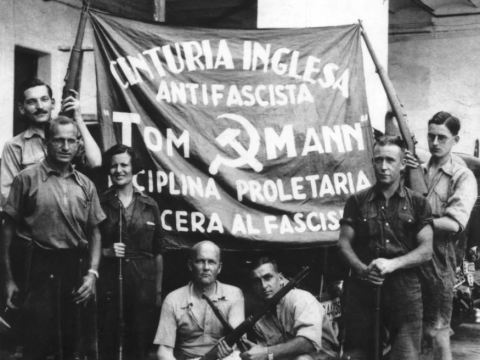
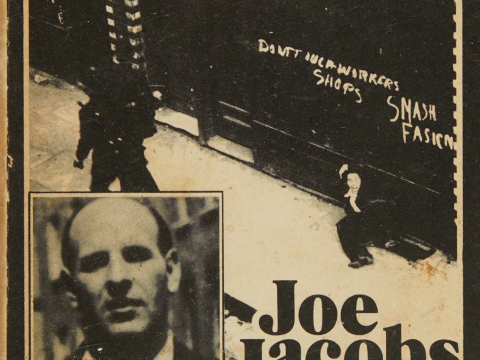
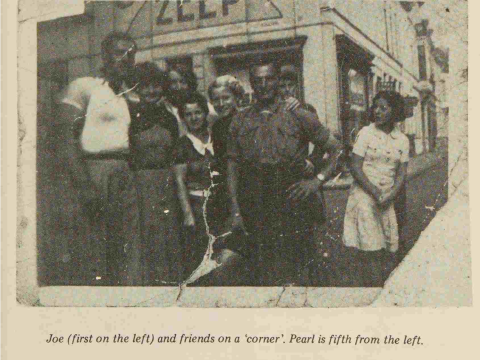
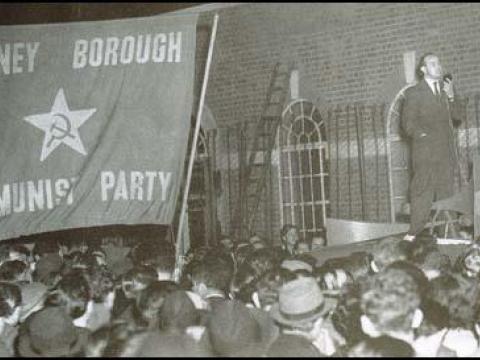
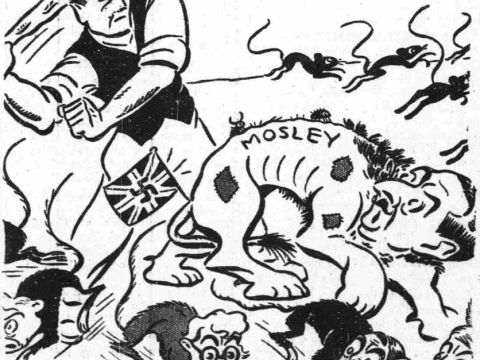
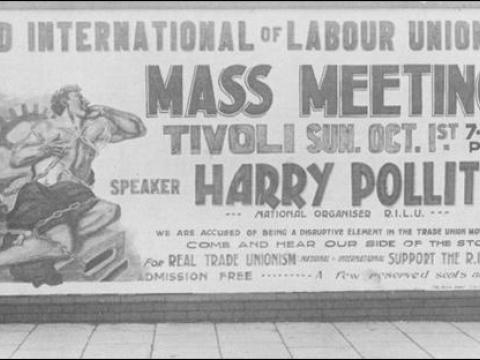
Comments